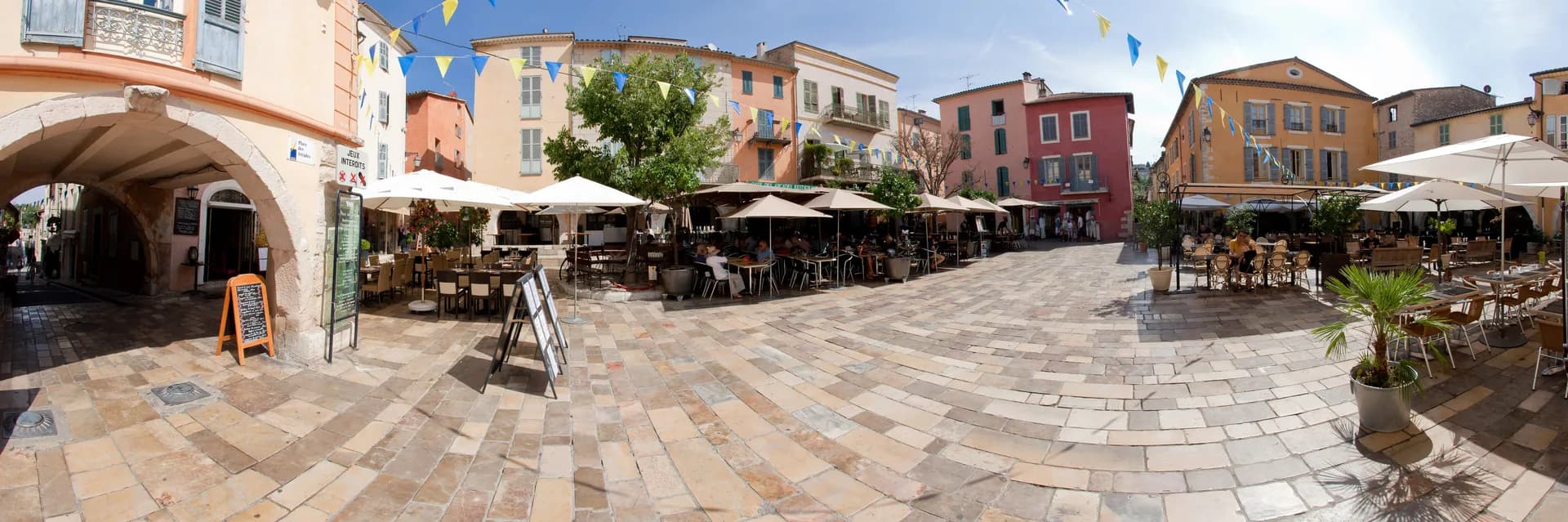
Is a foreigner allowed to buy property in France?
Quick answer: Yes. France places no restriction on foreigners or non-residents buying property. There is no nationality requirement, no permit and no extra purchase tax for overseas buyers. The process is the same as for a French national. The differences lie in financing, tax residency and estate planning.
Whether you live in London, New York, Geneva or Dubai, you are free to own a home on the French Riviera outright. What changes for an international buyer is not permission but the decisions around it: how to fund the purchase, which annual and exit taxes apply, how the property passes to your heirs, and how to move the money at a fair cost. This guide follows the process from start to finish and links to a dedicated guide for each of those decisions.
General guidance, not advice
This is an overview for foreign buyers, not legal, tax or financial advice. The process and figures depend on the property and on your situation, and the rules change. Work with a French notaire and the right advisers for your transaction. Verified 29 June 2026.
What are the steps to buy a property in France?
Offer → preliminary contract (compromis de vente) with a 5–10% deposit → a 10-day cooling-off for the buyer → conditions (such as the mortgage) are met → final deed (acte authentique) before the notaire, usually 2–3 months later. You receive the keys at the final signing.
The notaire runs the process, and it follows a set order:
- Offer & acceptance. You agree the price and terms. The offer is often made in writing.
- Compromis de vente. The binding preliminary contract. The buyer pays a deposit (usually 5–10%), which the notaire holds. The contract lists any conditions suspensives that must be met, most often the mortgage offer.
- 10-day cooling-off. The buyer is entitled to withdraw without penalty within ten days of the compromis (see below).
- Notaire’s checks. Over the following weeks the notaire verifies title, diagnostics, planning, pre-emption rights and the discharge of any mortgage.
- Acte authentique. You sign the final deed before the notaire, pay the balance plus fees, and ownership transfers. This usually happens two to three months after the compromis.
Plan your funding and currency around these dates. The deposit at the compromis and the balance at completion are two separate transfers. The currency and mortgage guides below cover both. Our own part in each step is set out in how we run a purchase.
What is the compromis de vente and the 10-day cooling-off?
The compromis is the binding preliminary sale contract. Once it is signed, the buyer has a statutory 10-day cooling-off period to withdraw without giving a reason and without penalty, and gets the deposit back. After that, the buyer is committed unless a written condition (such as a mortgage refusal) fails.
The compromis binds both sides: the seller to sell and the buyer to buy, at the agreed price. The buyer has two protections. The first is the ten-day withdrawal window, which runs from the day after the buyer receives the contract. The second is the conditions suspensives, exits agreed in advance. The most important is the mortgage condition, which returns the deposit if the bank refuses the loan. If you pull out after the cooling-off and outside those conditions, you normally lose the deposit. The contract binds you, so have the compromis checked before you sign, including the wording of any mortgage condition.
What diagnostics and energy rules (DPE) should I know about?
The seller must provide a pack of diagnostics (the DDT), including the energy rating (DPE). Under the Climate and Resilience Law, the worst-rated homes are leaving the rental market in stages. Since 1 January 2025, no new letting of a class G home is allowed, class F follows from 2028 and class E from 2034. The ban concerns letting, not selling. It matters if you plan to rent the property out.
The dossier de diagnostic technique brings together the energy performance report (DPE) and, where they apply, the lead, asbestos, termite, gas, electricity and natural-risk reports. For an international buyer, the main issue is the DPE letting calendar, according to economie.gouv.fr:
| DPE class | New lettings banned from |
|---|---|
| G | 1 January 2025 |
| F | 1 January 2028 |
| E | 1 January 2034 |
Buying and selling a poorly rated home remains legal. When the home is a house rated F or G (or E, since 1 January 2025), the seller must supply an audit énergétique. A buy-to-let plan, though, must budget for renovation up to a rating that allows letting. Many older Riviera houses with character need energy work. Price it in.
What does it cost, and how do I fund and structure the purchase?
On top of the price, budget about 7% notaire fees on a resale and plan your financing under the HCSF rules. Then look at the annual taxes, capital gains tax on exit, succession, the ownership structure and currency. Each has its own guide below.
This guide links to a dedicated guide, built on primary sources, for each decision a foreign buyer faces on the Riviera:
- Acquisition costs: Notaire fees in France 2026: ~7% on a resale in the Alpes-Maritimes, where the departmental DMTO stayed at 4.50%.
- Financing: Non-resident mortgages: the HCSF 35% rule, loan-to-value and the banks lending today.
- Local process: The hinterland buying process: from compromis to acte, with timings and the deposit.
- Annual taxes: Taxe foncière & taxe d’habitation, including the second-home habitation tax and the zone-tendue surcharge.
- Selling later: Capital gains tax for non-residents: rates, the UK/EU position and the taper to zero.
- Inheritance: French succession & inheritance and the English-law wills position.
- Ownership structure: Owning through an SCI, and the IFI wealth tax.
- Moving money: Currency for buying in France: spreads, forwards and timing.
When you want numbers for a specific property, our online estimate tool and our team will model the full cost of buying and holding it in your situation.