Buying Guide
Castellaras, Valbonne
Valbonne's most exclusive address, where timeless design meets the French Riviera's finest living
In This Guide
Castellaras, Valbonne
What Is Castellaras, and Why Does It Command a Premium?
Castellaras is Valbonne's highest-set neighbourhood—both literally and figuratively. Perched on the northern slopes above the old town, it's a residential sector that combines privacy, architectural distinction, and proximity to Sophia Antipolis with genuine quality of life. Unlike Valbonne's central village, which bustles with weekend tourists and markets, Castellaras feels residential and tranquil. The air is fresher here, the views open onto rolling Provençal hills, and the homes reflect considered design rather than speculative development.
The neighbourhood's premium positioning stems from three sources. First, there's the Castellaras le Vieux estate itself—an exceptional architectural landmark designed by Jacques Couëlle in the 1950s-60s that sets the quality bar for the entire sector. Second, the location offers both peace and pragmatism: you're minutes from Sophia Antipolis's major tech companies yet far enough removed to avoid the noise of office parks. Third, Castellaras attracts a particular sort of buyer—often international, professionally accomplished, and uncompromising about their environment. That selectivity creates a self-reinforcing dynamic where standards stay high.
The topography itself shapes the character. Castellaras sits at 250-300 metres elevation, ensuring that summer heat is tempered by elevation and winter cold rarely bites. The Esterel and Tanneron mountains form a stunning backdrop to the south. Street names—Chemin des Castellaras, Route de Châteauneuf, Avenue Saint Roch—carry the weight of history and careful planning. It's a neighbourhood where property preservation rules are enforced, where new builds respect original character, and where estate agents screen buyers not just for money but for intent.
Castellaras le Vieux: The Couëlle Estate
Castellaras le Vieux isn't a gated community in the modern sense—it's a cooperative, founded on architectural and environmental principles that were radical when conceived and remain visionary today. The estate comprises 82 distinctive Provençal houses designed by the Swiss architect Jacques Couëlle between the 1950s and 1960s, arranged organically across 13 hectares of parkland.
Couëlle's approach rejected the linear street-and-plot model. Instead, he designed homes as individual structures that respond to topography and microclimate, connected by winding pedestrian pathways and interspersed with olive groves, Mediterranean vegetation, and water features. Every house is different—there's no cookie-cutter repetition. Materials favour natural stone, terracotta, and timber. Openings are positioned to capture light and views without sacrificing privacy. It's a masterclass in human-scale density, predating the "New Urbanism" movement by decades.
Ownership in Castellaras le Vieux is structured through a cooperative model (a French "copropriété"). Residents pay modest fees for collective maintenance of pathways, parkland, and shared amenities, but there's no developer taking a cut, no corporation controlling the property. That matters psychologically and economically. Decisions about preservation and change go to the membership, not a board serving shareholders.
The estate's amenities reflect its vintage elegance rather than modern luxury resort aesthetics. There's a heated swimming pool (for community use, included in annual fees), tennis courts, a clubhouse with a small restaurant, and a concierge service. Security is discreet but comprehensive—24/7 gated entry, but no aggressive barriers or surveillance theatre. The cooperative employs groundskeepers who maintain the parkland to a standard that outpaces almost every private development in the region.
Past residents read like a roster of 20th-century achievement: the Aga Khan maintained a presence here; Elizabeth Arden's heirs owned property; Ian Fleming spent time in Castellaras (his James Bond had taste); David Niven and Charles Boyer, the dapper Parisian actor, made homes here. Today's residents are similar: retired executives, successful entrepreneurs, creative professionals, and families who've opted for understated elegance over new-build opulence.
What's it actually like to live there? Residents describe a paradox: the gated entrance creates a sense of arrival and exclusivity, but once inside, the community is surprisingly social. The parkland becomes your extended garden. Children play safely on traffic-free paths. The architectural cohesion—all those carefully proportioned Couëlle homes—creates a visual rhythm that improves over time rather than jarring. Morning coffee on a terrace overlooking olive trees. Afternoon swims in the heated pool. Evening gatherings at the clubhouse restaurant. It's a life.
Beyond the Estate: Greater Castellaras
If Castellaras le Vieux is the jewel, Greater Castellaras—the broader neighbourhood outside the gated estate—is the setting that makes the jewel shine. This area has diversified significantly over the past decade, with property types ranging from refurbished Provençal villas to contemporary design-conscious builds, from apartment complexes serving commuters to luxury new developments.
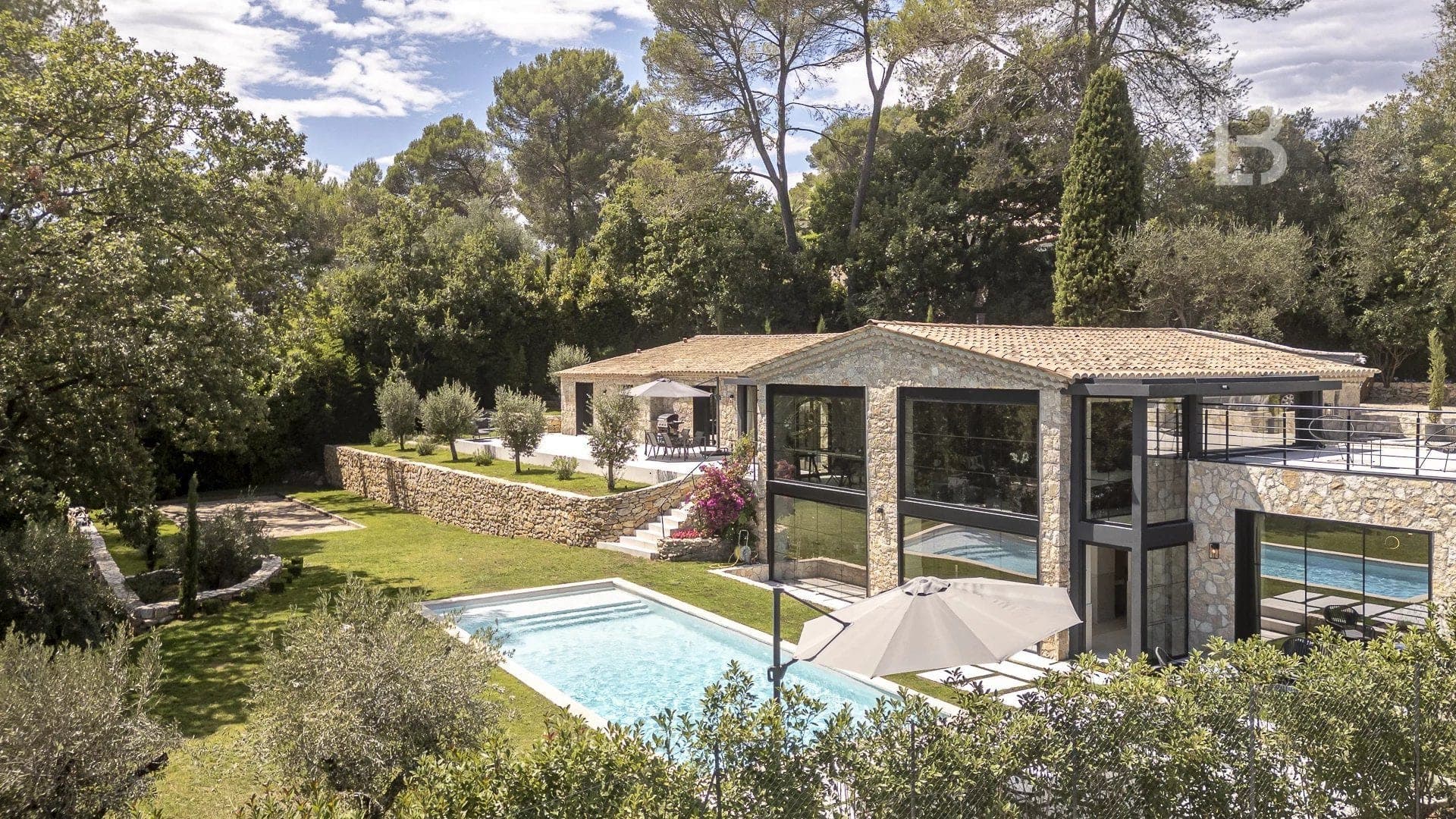
The wider sector includes both older properties (many dating from the 1970s-1990s) and recent construction. Unlike le Vieux, these homes vary widely in architectural approach. You'll find traditional stone farmhouses with modern extensions, mid-century villas with updated interiors, and contemporary minimalist homes clad in concrete and steel. That diversity creates opportunity: buyers seeking "authenticity" can find it; buyers wanting clean contemporary lines equally can.
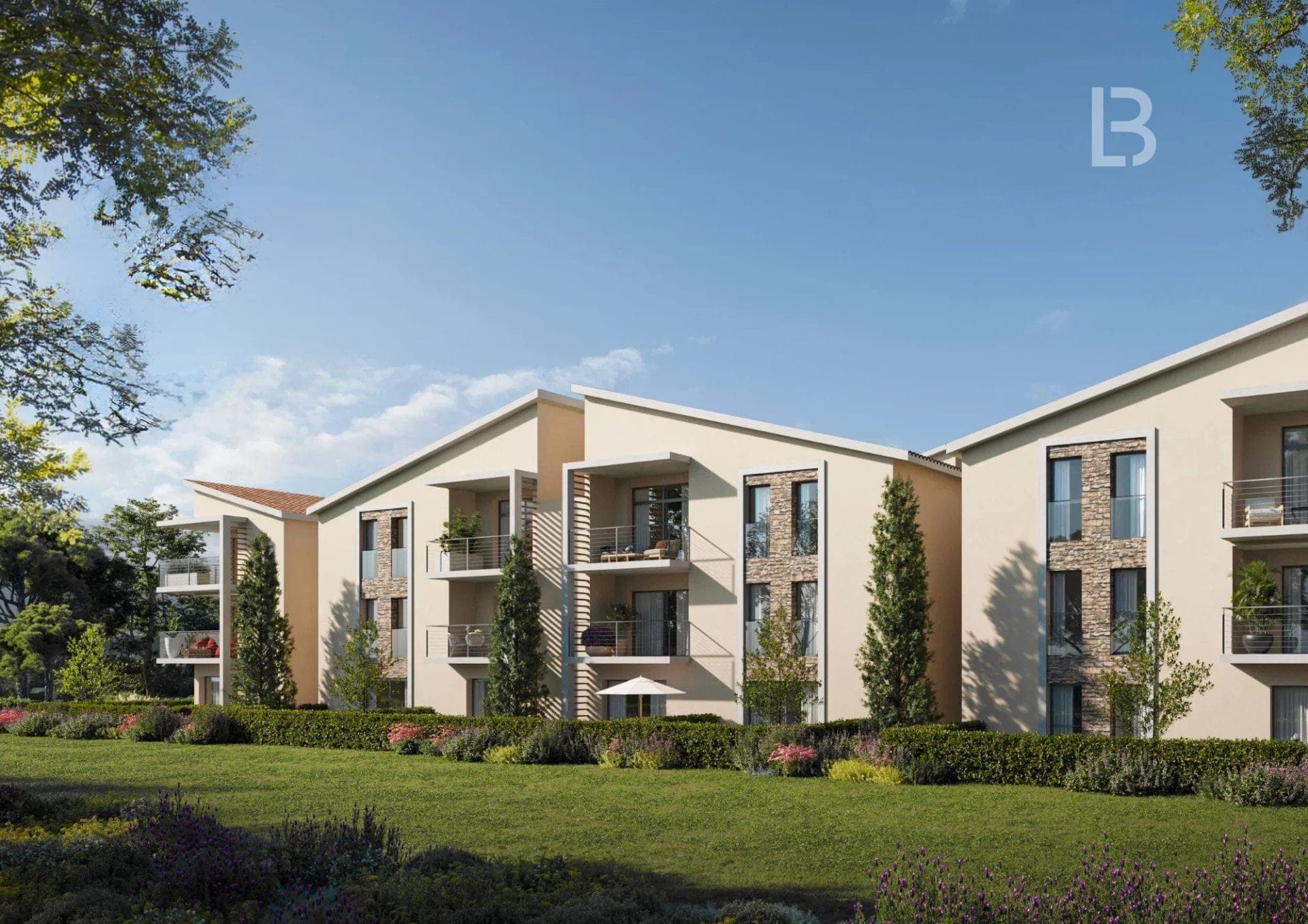
Newer developments like La Canopée programme exemplify recent trends. This mixed-use community near the entrance to Castellaras offers studios from €199,000 and four-bedroom homes from €529,000, targeting the tech commuter and young family market. Build quality is high, energy efficiency is modern-standard, and the pricing undercuts Castellaras le Vieux while maintaining neighbourhood prestige. These projects don't try to replicate Couëlle's organic master planning; instead, they embrace urban design principles—walkability, ground-floor retail, shared courtyards—suited to younger buyer profiles.
Greater Castellaras also hosts the CIV international school campus, a sprawling 12-hectare facility that anchors the neighbourhood's family-friendly reputation. We'll explore CIV in depth later, but its presence affects the broader area: it drives demand from expatriate families, creates local employment, and ensures steady foot traffic and a genuine sense of local community.
The streets of Greater Castellaras carry names heavy with local history—Avenue Saint Roch, Chemin de Peyniblou, Rue de la Fontaine—suggesting layered settlement and careful naming conventions. Amenities include small shops, a boulangerie that serves both estate residents and passing traffic, and proximity to larger commercial zones (Leclerc supermarket, pharmacies) just 10 minutes away by car. It's a neighbourhood that works for daily life without sacrificing the sense of being somewhere special.
Property Prices in Castellaras: What the Data Shows
Let's ground this in numbers. Based on recent data from the Direction Générale des Finances Publiques (DVF), Valbonne's overall market shows healthy momentum. We're seeing houses averaging €6,753 per square metre, apartments at €4,402 per square metre. Year-on-year growth is solid: houses up 10%, apartments up 2.3%. Over the past decade (2014-2025), both categories have appreciated 35% in absolute terms.
Castellaras commands a premium above those baselines. Within Castellaras le Vieux specifically, homes typically trade at €8,000-€12,000 per square metre depending on size, condition, and view orientation. A 150-square-metre Couëlle house with good maintenance and southern exposure might ask €1.2-€1.5 million. A smaller (90 sqm) unit in need of renovation could be €700,000-€900,000. Those prices reflect scarcity: Couëlle homes rarely come to market. When they do, competition is immediate.
Greater Castellaras shows more variation. Newer developments like La Canopée price around €8,000-€9,000 per square metre, aligned with Valbonne's premium sectors. Refurbished older homes run €7,000-€9,500 depending on condition and amenities. A three-bedroom villa in good condition might cost €850,000-€1.2 million. A four-bedroom contemporary home could reach €1.5 million.
To contextualize: Avenue Saint Roch (a premier street in Castellaras) shows average prices of €10,492 per square metre; Chemin de Peyniblou, €11,558 per square metre. These premium streets command 55-70% premium over broader Valbonne averages, reflecting their exclusivity and heritage.
Recent transaction data (past 12 months) shows 39 house sales and 32 apartment sales across greater Valbonne. In Castellaras specifically, velocity is lower—perhaps 8-12 house transactions annually in the entire sector, suggesting the thinness of the market. When homes sell, they tend to go quickly, often without extensive marketing. Our contacts in the local estate agent community report that word-of-mouth and direct outreach to existing resident networks is the primary sales mechanism.
| Metric | Houses | Apartments |
|---|---|---|
| Valbonne Average (€/m²) | €6,753 | €4,402 |
| Castellaras Average (€/m²) | €8,500–€11,500 | €6,500–€8,500 |
| Castellaras le Vieux (€/m²) | €9,000–€12,000 | N/A (houses only) |
| YoY Growth | +10% | +2.3% |
| 10-Year Growth (2014–2025) | +35% | +35% |
One important note: prices in Castellaras have held remarkably steady during macro volatility. The 2020 COVID crash that hit second-home markets hard barely touched Castellaras prices, suggesting strong demand from serious buyers (professional relocations, long-term residents) rather than speculators.
Who Buys in Castellaras?
The buyer profile in Castellaras is remarkably consistent. From conversations with local agents and our own market analysis, we see several primary archetypes.
British families seeking excellent schools: CIV's British-leaning curriculum and A-Levels programme pull British expatriate families from across the region. Parents are often in their early 40s, financially accomplished (corporate executives, finance professionals, business owners), and willing to pay premium prices for peace of mind around education. They typically purchase a 3-4 bedroom villa (€900,000-€1.5 million range) and plan a 5-10 year residency while children move through secondary school.
Parisian couples in early retirement: Successful Parisians exiting corporate life represent perhaps 25-30% of Castellaras buyers. They're drawn by quality of life, lower stress, and the ability to maintain cultural connections (Paris is still 3 hours away). These buyers often choose smaller footprints (100-120 sqm) than their Paris apartments but demand impeccable finishes and positioning. Budget: €900,000-€1.3 million.
Tech professionals at Sophia Antipolis: Engineers, product managers, and startup founders working at firms like Accenture, Amadeus, or emerging tech companies represent growing demand. These are often dual-income households, internationally mobile, and value short commutes and lifestyle quality equally. They represent the strongest growth segment and are more likely to purchase new-build properties (La Canopée appeals strongly to this group). Budget: €700,000-€1.2 million.
Retirees from Northern Europe: Affluent retirees from Germany, Switzerland, and the Netherlands purchase Castellaras homes as both primary residences and long-term investments. They value the balance of amenity proximity and insularity. Castellaras le Vieux appeals strongly to this group—the structured community, professional management, and social infrastructure suit this demographic. Budget: €1-€1.8 million.
Multi-property investors: A smaller but consistent cohort acquires Castellaras properties as investment holdings, often with rental intent. These buyers require thorough analysis of rental yields and cash flow (we'll cover this in detail later). They tend to target newer properties in Greater Castellaras over Couëlle homes, which are viewed as residential assets rather than income generators.
What unites these buyers isn't income level per se (though all are clearly affluent), but values alignment. Castellaras buyers care about architecture, about neighbourhood preservation, about not being surrounded by wealth but being part of a discerning community. That selectivity, honestly, is the primary draw.
Schools and Family Life
If one factor drives Castellaras's sustained demand, it's the proximity of CIV International School. CIV is the French Riviera's premier international school, with 2,300+ students from 65 nationalities across a sprawling 12-hectare campus. The school operates from nursery through to A-Levels (or IB equivalent), making it a genuine one-school solution for expatriate families.
What matters is that CIV is free. It's a public French school with a strong international curriculum overlay, meaning families with French residents in the household pay essentially zero tuition (standard French public school funding). That radically changes the economic calculation for British, American, and other expatriate families considering long-term residence. A €1.2 million property purchase suddenly makes sense when you're not simultaneously paying €15,000-€25,000 annually per child for private school.
The school itself is excellent. Recent exam results (IB exams, English GCSEs, French Baccalauréat) place CIV in the top quartile nationally. Sports facilities are world-class—Olympic-sized pool, multiple tennis courts, climbing wall, full sports hall. Performing arts programming is serious. The parent community is accomplished and engaged.
Beyond CIV, Castellaras families often consider Mougins School (7km away, independent, IB programme, fees ~€18,000 annually), the International School of Côte d'Azur in Villeneuve-Loubet (15km, IB curriculum, higher fees), or even options in nearby Sophia Antipolis. But the CIV proximity creates a powerful anchor, particularly for families with children aged 3-16.
Day-to-day school run logistics are manageable. CIV operates shuttle buses from Castellaras, or the drive is 5-8 minutes depending on traffic. The school runs year-round programming including holiday clubs, meaning working parents have structured childcare. Summer camps during July-August keep children occupied while some families take extended holidays.
Beyond school, Castellaras supports active family life. Local playgrounds are well-maintained. The Sophia Antipolis area has excellent sports clubs (tennis, football, swimming). Weekend farmer's markets in Valbonne village attract families. Hiking trails in the surrounding hills are accessible. It's not a sprawling suburbia with American-style kids' activity overload, but it's definitely a place where families thrive.
The Sophia Antipolis Connection
Sophia Antipolis is Europe's largest technology park—a sprawling research and business campus 20 minutes from Castellaras that employs over 40,000 people across 2,500+ companies. For professional buyers, that proximity is essential context.
The park hosts multinational tech giants (Accenture, Amadeus, Huawei), pharmaceutical and biotech firms (Servier, Phocéa), and a dynamic startup ecosystem. Major software development, machine learning, and fintech work happens here daily. For tech professionals and their families, Sophia Antipolis often means an excellent job opportunity at a globally competitive salary—and that's a primary driver of Castellaras purchasing.
The commute from Castellaras to Sophia is straightforward. Driving: 8-12 minutes depending on which Sophia campus. Public transport: you're connected via regional bus network, though most commuters drive. The proximity creates a lifestyle advantage: you can work in a world-class tech environment yet live in a village-like setting, see the Mediterranean light, and have dinner with your family by 7pm. That arbitrage—Silicon Valley salaries with Côte d'Azur living—is powerful.
We've noticed something interesting in recent transactions: Castellaras purchases by tech professionals have accelerated notably in the past 18-24 months, particularly among developers and architects aged 30-45. These buyers are often remote-capable, meaning they work for Sophia-based companies but have the flexibility to spend time in other locations. That flexibility makes a premium property in Castellaras more attractive than it would be to someone locked into an office commute.
The Sophia ecosystem also ensures a consistent stream of expatriate professionals—people in their first international assignment, looking for a home that feels permanent and integrated. Castellaras appeals strongly to this demographic because it's neither expat ghetto nor rural isolation; it's a genuine French neighbourhood with international infrastructure nearby.
Living in Castellaras: The Daily Experience
What is daily life actually like in Castellaras? Our interviews with residents paint a remarkably consistent picture.
Morning: You wake to birdsong and reasonable light (even in January, the elevation and latitude mean decent early light). If you're in Castellaras le Vieux, you might take coffee on a terrace overlooking the parkland and olive groves. The commuter among you heads to Sophia Antipolis; the remote worker settles into a home office with views. Children are readied for the school bus or a short drive to CIV. The air feels fresh—pollen and humidity are lower than coastal zones.
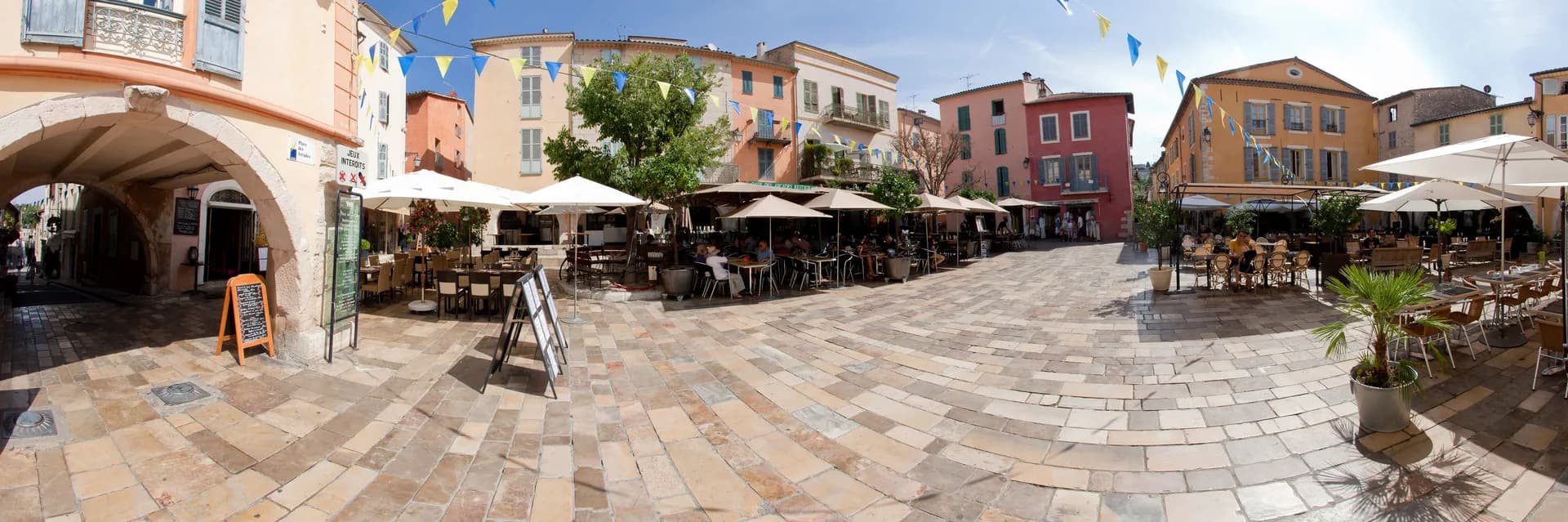
Midday: You might pop into Valbonne village (5-minute drive or 15-minute walk) for fresh bread and a simple lunch at one of the bistros on the central square. The market on Wednesday and Sunday morning is genuinely excellent—local farmers, cheese vendors, olive oil producers. The village itself is genuinely lovely: narrow streets, a small château, a Romanesque church, and that particular texture of French provincial charm that never ages.
Afternoon: Work continues or children return from school. If you're in Castellaras le Vieux, the pool or tennis courts might call. Grocery shopping at the Leclerc supermarket (larger and competitively priced) or at smaller neighbourhood shops. Running errands is efficient—pharmacies, banks, a post office are all within 2-3km. Greater Castellaras feels residential and quiet, unlike the tourist buzz of central Valbonne.
Evening: Dinner is typically home-prepared or sourced from neighbourhood restaurants. Castellaras isn't a destination dining neighbourhood (that's Grasse or Antibes), but several solid restaurants serve residents: casual neighbourhood bistros, a pizzeria, a place specializing in rotisserie chicken. Wine is affordable (the region produces decent rosé and white wines). After dinner, walks through Castellaras's lanes offer good exercise and constant architectural appreciation. The neighbourhood is safe, well-lit, and feels genuinely secure.
Weekends: Vary by family orientation. Hiking families head to the Tanneron or Esterel mountains (both 20-30 minutes). Beach-oriented families drive to Cannes or Antibes (25-40 minutes). Culture-seekers visit Grasse for its perfume heritage, or Mougins for galleries and restaurants. Families with children might spend time at local parks, Sophia's sports facilities, or CIV weekend programming. Summer weekends often mean swimming—either the Castellaras le Vieux pool or a beach day.
The rhythm is distinctly French but internationally flavoured. You're not in a bubble of expat angst; French is spoken widely and daily French life is navigable. But you're also not in the deep provinces—Paris is reachable for long weekends, Nice airport is 45 minutes, and the infrastructure makes international living easy and comfortable.
Investment and Rental Potential
For buyers considering Castellaras as an investment, the data is encouraging but comes with significant caveats.
Rental yields: Across the French Riviera, net rental yields typically range 4-6% annually. In Castellaras specifically, we're seeing newer properties (La Canopée, contemporary builds) achieve 5-5.5% net yields, while Castellaras le Vieux properties yield closer to 3.5-4.5% due to their higher capital cost and lower rental income per square metre.
Why the difference? Newer properties rent more productively—holiday rentals and short-term lets generate €120-€180 per square metre monthly during peak season (June-September). A 100-square-metre apartment in La Canopée might gross €12,000-€18,000 over three summer months, with consistent demand from families seeking Riviera escapes. Castellaras le Vieux, by contrast, is genuinely residential; owners resist holiday rental (the cooperative has guidelines), and long-term lettings at €1,500-€2,200 monthly for a three-bedroom home are the norm.
Tenant quality and management: Because Castellaras attracts professional, affluent renters (expatriates mid-assignment, professionals on secondment, families seeking furnished accommodation), tenant quality is consistently high. Damage rates are low. Default rates are negligible. Property management companies specialized in the sector (Thrive, Riviera Lettings) charge 8-12% management fees and handle all logistics professionally.
Appreciation trends: Over the past decade, Castellaras has appreciated broadly in line with Valbonne (+35% total, or ~3% annually). That's respectable but not spectacular. It's entirely possible that the next decade delivers similar returns—steady, inflation-beating, but not wealth-creation level. Capital appreciation isn't the primary value proposition; yield and lifestyle are.
The practical reality: Our observation is that investors succeed in Castellaras when they approach it as strategic hold rather than flip. Buy a well-positioned newer property, rent it seasonally or to long-term tenants, collect yield, and expect appreciation to be a bonus rather than the focus. Taxation is important: rental income is subject to French income tax (progressive rates up to 45%) and social charges (~17.2%), though certain holiday rental regimes and co-ownership structures offer optimization opportunities. Working with a tax accountant specializing in French real estate is essential.
How Castellaras Compares to Other Premium Sectors
How does Castellaras stack up against other premium Côte d'Azur hinterland sectors? This context matters for buyers deciding between comparable neighbourhoods.
| Sector | Avg House Price (€/m²) | Character | Key Draw | Buyer Profile |
|---|---|---|---|---|
| Castellaras, Valbonne | €8,500–€11,500 | Architectural integrity, quiet, hilltop setting | Couëlle estate, CIV school, Sophia proximity | Tech professionals, British families, discerning retirees |
| Mougins Village | €10,000–€14,500 | Medieval charm, art galleries, restaurants | Tourist appeal, cultural vibrancy, altitude | Retirees, cultural enthusiasts, second-home buyers |
| Biot Village | €7,500–€9,500 | Medieval, artistic, bohemian | Glass blowing tradition, galleries, village life | Artists, bohemian retirees, younger professionals |
| Opio Area | €6,500–€8,500 | Rural, winemaking, authentic villages | Authenticity, wine culture, lower prices | Wine enthusiasts, value-conscious buyers |
| Grasse Outskirts | €5,500–€7,500 | Perfume heritage, larger town amenities | Affordability, town services, cultural heritage | Value buyers, business owners, commuters |
Castellaras vs. Mougins Village: Mougins is pricier and more tourist-oriented. Village real estate has strong rental appeal (many weekend visitors), but that means crowds, noise, and the sensation of being in a theme park rather than a living neighbourhood. Castellaras is quieter and more genuinely residential. Mougins suits retirees seeking village ambiance and cultural engagement; Castellaras suits families and professionals seeking peace.
Castellaras vs. Biot: Biot is more bohemian, more artistic, lower-priced. It appeals to creative professionals and younger buyers comfortable with genuine village rawness. Castellaras is more polished, more cosmopolitan, pricier. The choice depends on whether you want to be part of a countercultural village or a discerning cosmopolitan enclave.
Castellaras vs. Opio and Grasse outskirts: These are genuine value plays. If price sensitivity is primary, you can find excellent homes outside Castellaras. But you sacrifice the architectural heritage, the professional proximity of Sophia, the CIV advantage, and the sense of being somewhere genuinely special. For price-focused buyers, Opio or Grasse outskirts make sense. For those for whom location and community are paramount, Castellaras's premium is justified.
Buying in Castellaras: Practical Steps for International Buyers
For international buyers considering Castellaras, the acquisition process differs from home-country conventions in important ways. Understanding the mechanics matters.
1. Pre-purchase diligence: Before making an offer, commission a thorough inspection (diagnostic technique). This €300-€500 investment is non-negotiable. French building codes, energy efficiency standards, and structural potential differ from Anglo-Saxon equivalents. Hire an English-speaking architect or surveyor if French isn't fluent. Understand copropriété regulations if buying into an apartment or cooperative—read the syndicate minutes, understand ongoing fees, and confirm reserve funds are adequately capitalized.
2. Working with estate agents: French estate agents ("agents immobiliers") are regulated but operate under different standards than UK/US equivalents. Confirm your agent is affiliated with FNAIM (the national federation) and has professional insurance. Typically, the seller pays the agent's commission (5-8% of sale price), so you should work with agents without incurring direct cost. Negotiate exclusivity periods so you're not seeing the same properties through multiple agents.
3. Making an offer and securing the property: Offers in France typically include a 10% non-refundable deposit ("dépôt de garantie") held by the estate agent's trust account. The offer itself is usually non-binding until signed by all parties. Once a seller accepts, you sign a preliminary contract ("compromis de vente"), triggering a 10-day cooling-off period. After that period, the sale is binding.
4. The notaire process: French property transactions require a notaire (a public official, not an optional service like solicitors in the UK). The notaire handles title verification, tax calculations, and legal compliance. They charge fees of roughly 7-8% of purchase price (though this varies), split between buyer and seller. Notaire fees are non-negotiable but transparent. Budget an additional 2-3 weeks for notaire conveyancing after preliminary contract signature.
5. Financing: International buyers often finance partially through French mortgages. French banks lend up to 80% of property value to qualified buyers, at interest rates currently around 3-3.5% (rates fluctuate). Qualification requires: proof of stable income, employment contract or business documentation, EU/UK residency or work visa, and creditworthiness assessment. Non-EU international buyers face higher barriers; some French banks require 40-50% down payment.
6. Structuring ownership—SCI vs. direct ownership: Some international buyers create a French civil company ("Société Civile Immobilière" or SCI) to hold property rather than purchasing directly. This structure offers advantages: flexibility for inheritance planning, potential tax optimization for multiple properties, and cleaner succession if circumstances change. Setting up an SCI costs €1,500-€3,000 but can be worthwhile if you're purchasing multiple properties or have complex family structures. Consult a French tax accountant before deciding.
7. Ongoing obligations: Once you own property in France, you'll file annual tax returns and pay "taxe foncière" (property tax, usually €800-€2,000 annually depending on property value) and "taxe d'habitation" (residence tax, being phased out but still relevant for some). If you rent the property, you'll report rental income to the French taxman. These are non-optional; consult an accountant specializing in international property owners.
Timeline expectations: From identifying a property to taking possession typically takes 4-6 months. Preliminary contract to completion usually spans 8-12 weeks. Plan accordingly if you have a move deadline.
Professional support: Strongly consider hiring a bilingual property lawyer specializing in French real estate (budget €2,000-€5,000 for full representation). Their fee is well-spent if they catch issues with title, building compliance, or tax structure. Many UK, US, and German firms specialize in this sector and offer English-language support.
Sources
Sources
Market data and demographic claims in this article are anchored to the following primary sources:
- DVF (Demandes de Valeurs Foncières) — data.gouv.fr for every price and transaction figure.
- INSEE for demographic, household and employment data.
- Notaires de France for quarterly market commentary and regional commentary.
- service-public.fr for legal and procedural references (Notaire, Compromis, Acte authentique, taxes).
- ADEME for energy-performance (DPE) regulatory context.
Published by the La Reserve | Riviera Editorial Team. Editorial governance and correction policy: editorial standards. Corrections: contact@lareserve.co.
Frequently Asked Questions
Frequently Asked Questions
Need personalised guidance?
Our team knows every street and every sector across the hinterland.