Town Guide
Le Rouret: The Quiet Village Serious Buyers Are Discovering
A complete insider guide to property, lifestyle, and value in one of the French Riviera hinterland's best-kept addresses.
In This Guide
Le Rouret: The Quiet Village Serious Buyers Are Discovering
Why Le Rouret, and Why Now
For years, international buyers arriving on the Côte d'Azur headed straight to the headline names: Mougins for gastronomy, Valbonne for the village square and tech corridor, Grasse for perfume heritage. Le Rouret sat quietly between them, its property market driven almost entirely by local French families and a small circle of in-the-know expats. That's changing.
We've watched the ripple effect play out across the hinterland. As Valbonne and Mougins prices climbed — Valbonne now averages around €6,200/m² for houses, Mougins closer to €5,800 — buyers started looking one village further out. Le Rouret, at roughly €5,170/m² on average, offers the same climate, the same proximity to the coast, and access to the same schools, but at a price point that's 15-25% lower than its neighbours. That gap won't last forever.
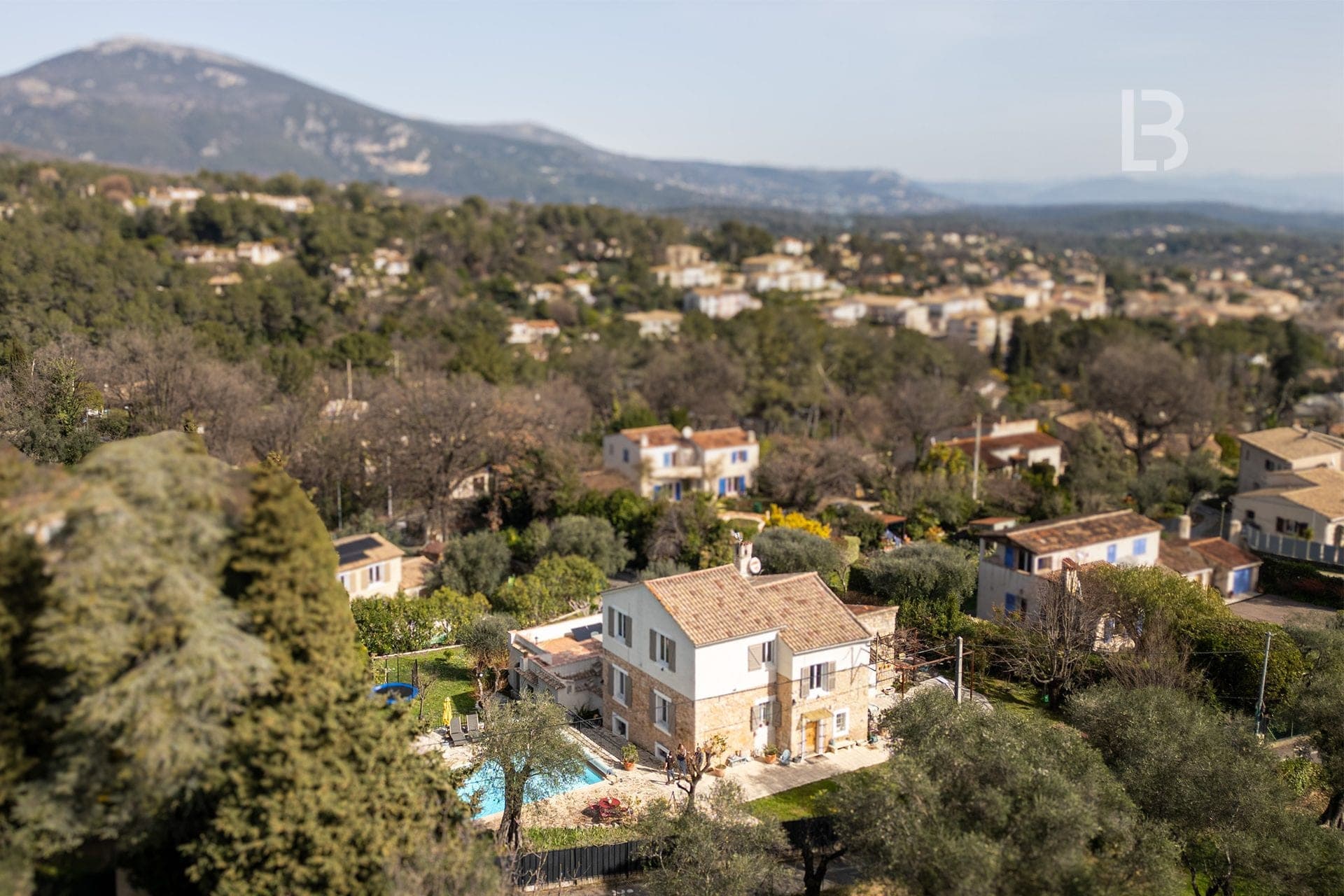
The shift isn't just about price. Remote work has changed what people prioritise. A British couple who once needed to be close to Nice Airport for weekly London flights now works from home three days a week and wants a garden, quiet streets, and a proper village baker. Le Rouret delivers exactly that — without feeling like you've moved to the middle of nowhere. You're still 30 minutes from the beach, 25 minutes from the airport, and 12 km from Sophia Antipolis.
Le Rouret is where Valbonne was ten years ago — before the international market caught on.
Village Character and Daily Life
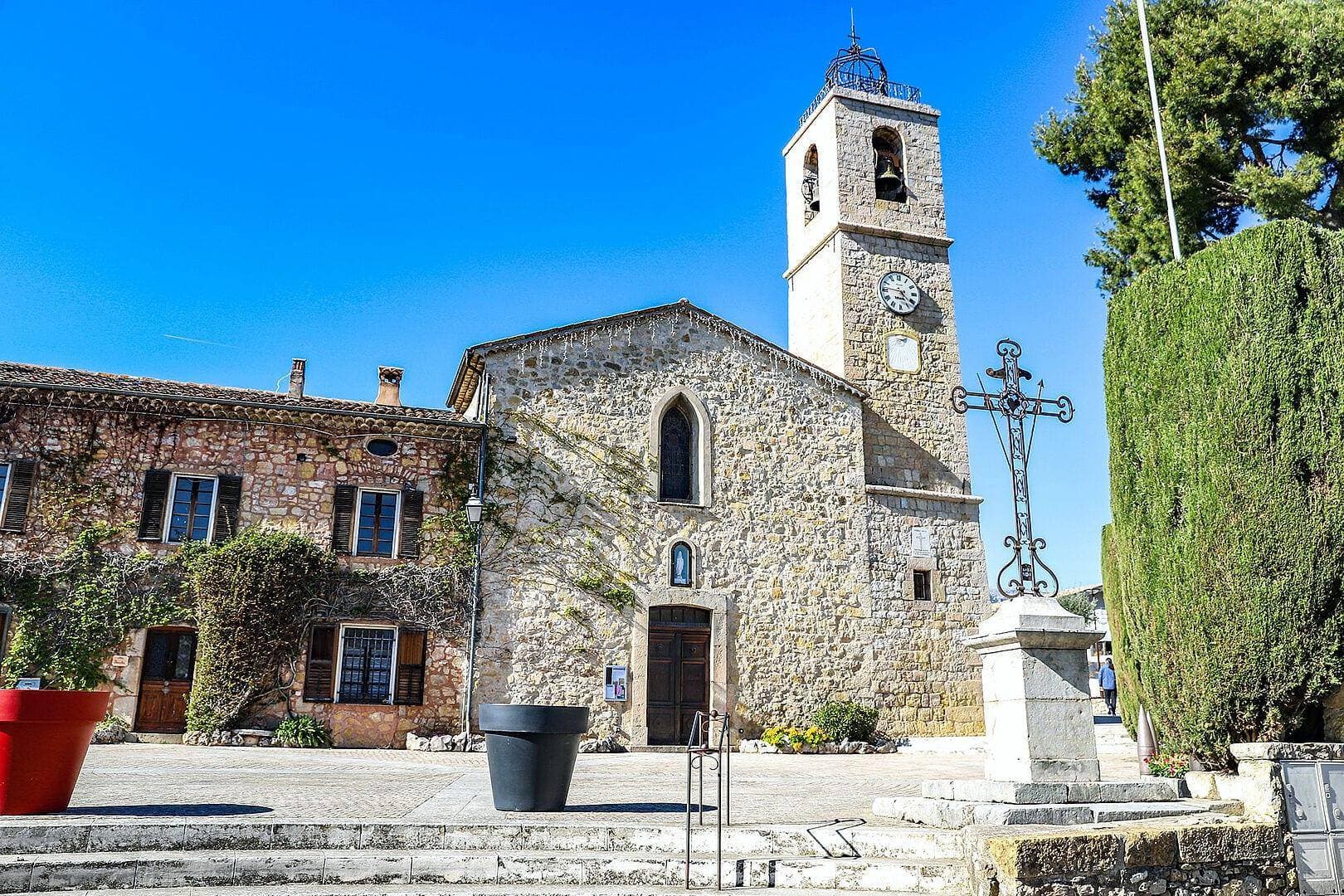
The name comes from the Latin robur — the sessile oak — and those old trees still mark the landscape. Le Rouret's centre is compact and genuinely pretty: a Place de la Mairie anchored by the Saint-Pons parish church (the bell tower dates to 1852), stone fountains, restored washhouses, and a century-old sheepfold that's been turned into a community space. It's not a museum village — people actually live here, and the shops reflect that. There's a boulangerie, a tabac-presse, a pharmacy, a butcher, a post office, and the kind of small grocery where the owner knows what you bought last Tuesday.
What makes Le Rouret feel different from, say, Roquefort-les-Pins or Châteauneuf-de-Grasse is the density of its village centre. You can park once and walk to everything you need. That walkability is rare in the hinterland, where many communes have spread into scattered residential zones with no real core. Here, the village feels genuinely alive — especially on Saturday mornings when the café terraces fill up and the Maison du Terroir cooperative on Avenue de Provence is selling fresh olive oil, local honey, and whatever's in season.
The surrounding countryside is a patchwork of flower farms (many still supplying Grasse's perfume houses), olive groves, and the occasional horse paddock. Driving the back roads between Le Rouret and Opio on a late-spring afternoon — windows down, the air thick with wild rosemary and cut grass — is one of those Riviera moments that no estate agent's brochure can quite capture.
There's also the Médiathèque Municipale on Place des Terrasses du Midi, which runs a solid programme of events, exhibitions, and children's activities. For a commune of this size, the cultural life is surprisingly active. You won't find the gallery scene of Mougins, but you will find a community that actually participates in its own village life.
Property Prices: What the Data Shows
As of early 2026, the average property price in Le Rouret sits at approximately €5,170 per square metre across all property types. That single number hides a wide range: from around €2,259/m² for properties needing significant work to €9,008/m² for fully renovated villas in the best positions.
| Property Type | Avg. Price/m² | Range/m² | 10-Year Growth |
|---|---|---|---|
| Houses / Villas | €5,274 | €2,307 – €9,470 | +31% |
| Apartments | €4,550 | €1,974 – €6,269 | +41.5% |
| All Properties | €5,170 | €2,259 – €9,008 | +35% (est.) |
DVF (Demandes de Valeurs Foncières) government data records 235 property transactions in Le Rouret since 2023, indicating a moderate but steady market. Recent transactions span from €369,600 (a smaller house or apartment) to €2,600,000 (a large villa on extensive grounds). The sweet spot, from what we see on the ground, is €600,000 to €900,000 for a well-maintained four-bedroom family villa with a pool and around 1,500–3,000 m² of land.
Year-on-year, prices have been moving gently upward — around 1.2% in the most recent period. That's not the dramatic spikes you saw in Mougins and Valbonne during 2021–2023, but it's steady growth that suggests a market finding its footing rather than one that's already peaked.
Key Price Insight
Le Rouret currently sits slightly below the Alpes-Maritimes departmental average of €5,600–5,700/m². For a commune this well-positioned — between Grasse and Valbonne, 25 minutes from the airport, with a Michelin-starred restaurant in the village — that represents genuine value. Comparable positioning in Mougins or Valbonne carries a 20–30% premium.
Sectors and Where to Buy
Le Rouret is small enough that it doesn't have the sharply defined sectors of a larger commune like Valbonne (where the difference between Castellaras and Val de Cuberte can mean €200,000 on the asking price). But there are distinct areas worth understanding.
Village Centre
The tightest ring around Place de la Mairie and Rue de la Liberté. Here you'll find smaller plots (often under 1,000 m²), older stone-built houses, and the occasional apartment in a converted building. Prices per square metre tend to be slightly higher because of the walkability premium, but total purchase prices are often lower because properties are smaller. Ideal for couples or downsizers who want village life without maintaining a large garden.
Les Paroirs
The residential area stretching south and east from the village, where the plots get larger and the houses more recent. This is where most family villas from the 1980s–2000s are concentrated — typically four to five bedrooms, pools, established gardens, on plots of 2,000–4,000 m². It's the quieter, more suburban feel of Le Rouret, but you're still only a five-minute drive (or a pleasant 15-minute walk) from the village shops.
Route de Grasse Corridor
Properties along and near the D2085 connecting Le Rouret to Grasse. The road itself can carry traffic, but step one street back and you're in countryside. Some of the larger estates — bastides with olive groves, old stone walls, and views toward the Préalpes — sit along this corridor. If you want land (5,000 m²+) and don't mind being a car-dependent ten minutes from the village, this is where to look.
Northern Hillsides (toward Châteauneuf)
The elevated ground rising toward Châteauneuf-de-Grasse offers the best panoramic views — south toward the coast on clear days, north toward the pre-Alpine ridgeline. Properties here tend to sit on larger plots with more privacy. Access roads are narrower, and some are unsuitable for large delivery vehicles. It's for buyers who want the "perched Provençal villa" experience without the price of Châteauneuf itself.
Property Types and What's Available
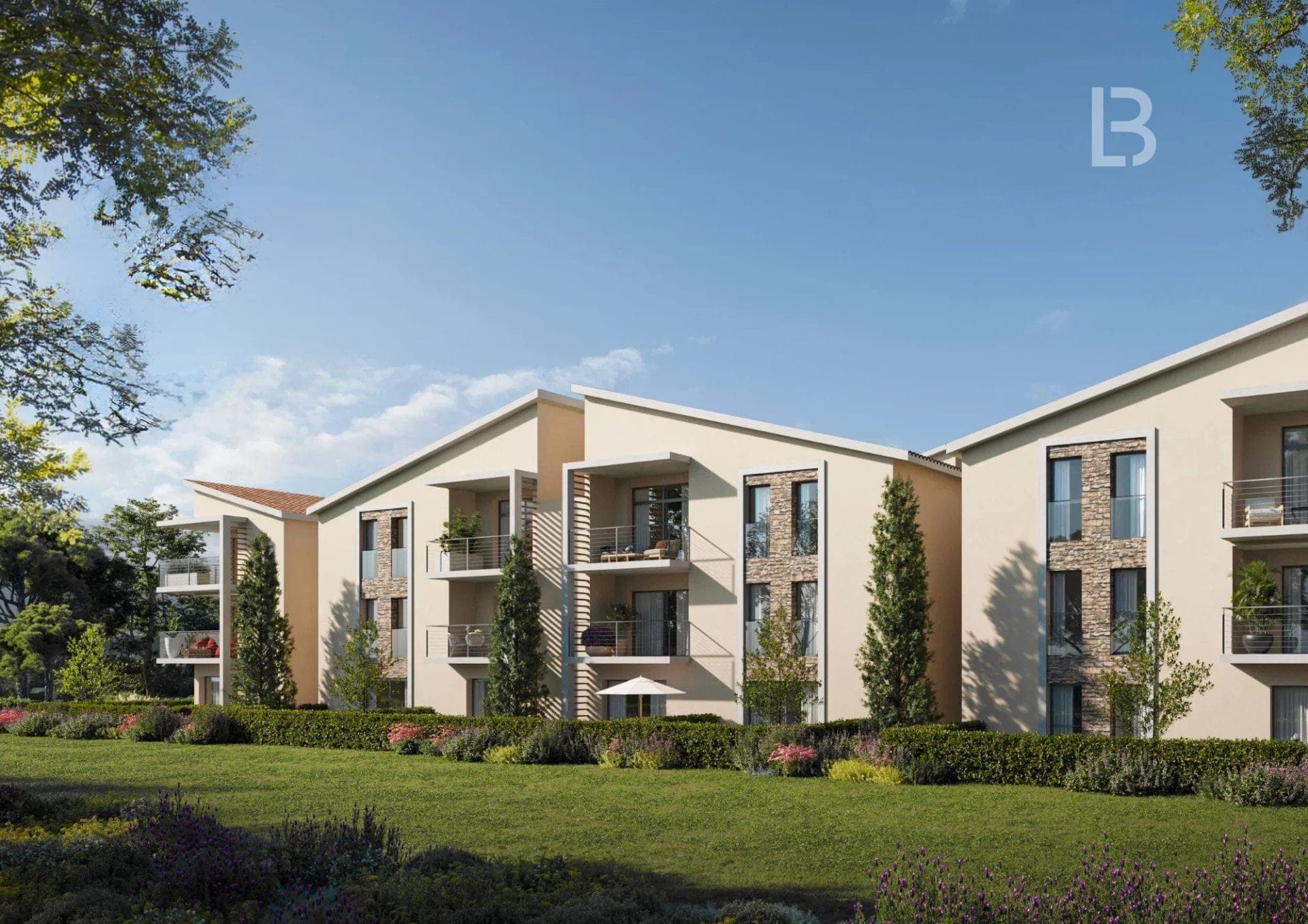
Le Rouret's housing stock is overwhelmingly detached. If you're after an apartment, your options are genuinely limited — a handful of small résidences near the village centre and the occasional converted floor of an older building. This isn't Antibes. For most buyers, Le Rouret means a house.
| Type | Typical Price Range | Plot Size | Condition Notes |
|---|---|---|---|
| Traditional Bastide | €800K – €2.6M | 3,000 – 10,000+ m² | Stone walls, terracotta roofs. Often need updating. |
| 1970s–80s Mediterranean Villa | €500K – €900K | 1,500 – 3,000 m² | Pool standard. Kitchen/bathroom reno likely. |
| Modern Build (post-2000) | €700K – €1.5M | 1,000 – 2,500 m² | Better insulation, contemporary finishes. |
| Village House | €350K – €650K | Under 500 m² | Charm and character. Often compact. |
| Apartment | €200K – €450K | N/A | Limited supply. Mostly 2–3 bed. |
One thing we consistently tell buyers: the 1970s–80s villas are Le Rouret's hidden opportunity. They were built during a period when plot sizes were generous and construction quality was solid, but the interiors now feel dated. A kitchen and bathroom renovation (budget €40,000–€80,000 depending on scope) transforms these properties into homes that would cost 30% more in Valbonne.
Schools and Family Life
Le Rouret was the first commune in France to serve exclusively organic meals to its school children, crèche, and leisure centre — and has maintained that commitment for over a decade. It's a small detail that tells you something bigger about the community's values.
For young families, the local schooling works like this. Le Rouret has its own école maternelle (nursery school) on Chemin de la Buissonnière and a primary school in the village. These are standard French public schools — lessons in French, the national curriculum, class sizes of 20–25 — with the added distinction of that all-organic canteen programme.
For secondary school (collège, ages 11–15), students typically attend Collège César in nearby Roquefort-les-Pins or Collège de la Chênaie in Mouans-Sartoux, both within a 10-minute drive. A school bus service runs during term time.
International families have strong options within reach. The Centre International de Valbonne (CIV) — one of France's most respected international schools, offering the French Baccalauréat with international sections in English, German, Italian, and more — is about 8 km away. We've worked with many families who specifically choose Le Rouret for its lower prices while sending children to CIV, saving significantly on property while accessing the same school. The Mougins School (British curriculum, ages 3–18) is a 15-minute drive.
School Distances from Le Rouret
- CIV (Valbonne) — 8 km, ~12 min drive. French Bac + International sections.
- Mougins School — 10 km, ~15 min drive. British curriculum, ages 3–18.
- Collège César (Roquefort) — 5 km, ~8 min drive. French public secondary.
- EBICA (Sophia Antipolis) — 12 km, ~18 min drive. Bilingual private.
Outside of school, Le Rouret has a good range of children's activities: a tennis club, several riding stables within a few kilometres (Roquefort-les-Pins is genuine horse country), and the municipal library runs a busy programme during school holidays. The countryside around the village is ideal for cycling and hiking with children — flat enough to be manageable, green enough to be interesting.
Dining and Local Food Culture
For a commune of 4,000 people, Le Rouret has no business having a Michelin-starred restaurant. And yet Le Clos Saint-Pierre, awarded its star in 2003, has been a fixture of the local dining scene for over two decades. Chef Daniel Ettlinger's kitchen turns out refined Provençal cooking that makes serious use of the surrounding terroir — local olive oil, herbs from the hills behind Grasse, fish from the coast.
If you want the same quality without the white-tablecloth commitment, Le Bistro du Clos sits next door — same ownership, seasonal menus, local produce, and a terrace that's one of the nicest spots in the village on a warm evening. It's the kind of place where you end up going every other week and realising you've become a regular.
Beyond those two, there's an honest pizzeria, a couple of cafés that do decent lunch menus, and — crucially — the Maison du Terroir cooperative. This is Le Rouret's real food story. The cooperative sells directly from local producers: olive oil pressed from the groves you can see from the village, honey from hives in the surrounding garrigue, seasonal vegetables, and wine from the nearby Côtes de Provence appellations. For anyone moving from a city, the shift to buying food this directly is one of the great pleasures of hinterland life.
The wider area fills in what Le Rouret doesn't have. Mougins — a 12-minute drive — has one of the highest concentrations of Michelin-starred restaurants in France. Grasse's food markets on Wednesday and Saturday mornings are a weekly pilgrimage for most residents. And Valbonne's Friday market, with its rotating cast of cheese makers, rotisserie chickens, and Provençal fabric sellers under the plane trees, is a 10-minute drive that feels like stepping into a photograph.
Getting Around: Location and Access
Le Rouret's position is one of its strongest selling points, and it's worth spelling out the numbers because they matter for day-to-day life.
| Destination | Distance | Drive Time | Notes |
|---|---|---|---|
| Grasse centre | 10 km | ~15 min | Via D2085. Markets, shopping, culture. |
| Valbonne village | 8 km | ~12 min | Via D3. Friday market, restaurants. |
| Sophia Antipolis | 12 km | ~18 min | Technology park. Major employer. |
| Cannes | 26 km | ~30 min | Via A8 or coastal route. |
| Nice centre | 28 km | ~35 min | Via A8 autoroute. |
| Nice Airport (NCE) | ~25 km | ~25 min | Direct motorway access. |
| Mediterranean beaches | 20–26 km | ~25–30 min | Antibes, Cannes, Villeneuve-Loubet. |
| Monaco | 45 km | ~50 min | Via A8 east. |
The 30-minute rule applies here — you can reach beaches, the airport, major shopping, and every significant town in the hinterland within half an hour. During summer peak traffic (July–August), the coast-bound routes add 10–15 minutes. Morning commutes to Sophia Antipolis run smoothly outside of the 8:15–8:45 school-run window.
Le Rouret doesn't have its own train station — the nearest is Mouans-Sartoux on the TER regional line, about 8 km away, with regular services to Cannes (15 min) and Nice (55 min). But in practice, like most hinterland communes, you'll need a car for daily life. Two-car households are the norm. Parking is easy — there's no congestion charge, no restricted zones, and most properties have garages or private parking.
Investment Case: The Numbers
We're careful about making investment promises — property markets don't move in straight lines, and past performance isn't a contract with the future. But the data points for Le Rouret tell an interesting story.
Over the decade to 2025, house prices grew approximately 31% and apartment prices grew 41.5%. That's solid by any measure, though less dramatic than the 50%+ surges seen in Mougins during the same period. The difference is that Le Rouret appears earlier in its growth trajectory — there's still pricing headroom before it reaches parity with its neighbours.
What's Driving Demand
Several structural factors work in Le Rouret's favour. The Sophia Antipolis technology park, Europe's largest, continues to expand and attract international professionals who need affordable family housing nearby. Remote work has made the hinterland attractive to a broader pool of buyers who previously required city proximity. And the supply side is constrained — Le Rouret's PLU (local urban plan) limits new construction density, protecting the village character but also limiting new supply.
Rental Potential
Le Rouret isn't primarily a rental market — most buyers are owner-occupiers. But for those considering rental income, the long-term unfurnished rental market is steady, driven by Sophia Antipolis employees on 2–3 year contracts. A four-bedroom villa with a pool rents for approximately €2,200–€3,000 per month, yielding roughly 3.5–4.5% gross on a €750,000 purchase. Short-term holiday rentals are less common here than on the coast, though the proximity to Cannes during festival season (Film Festival, MIPIM, MAPIC) creates premium week-long rental opportunities.
Investment Snapshot: Le Rouret
- 10-year house price growth: ~31% (2014–2025)
- 10-year apartment price growth: ~41.5% (2014–2025)
- Recent annual change: +1.2%
- Long-term rental yield (gross): 3.5–4.5%
- Price gap vs Valbonne: 15–25% lower
- Price gap vs Mougins: 20–30% lower
- Supply constraint: PLU limits density. Limited new builds.
Who Buys in Le Rouret
In our experience, Le Rouret attracts a particular kind of buyer. They're not first-time visitors to the Riviera — they've often spent holidays in Cannes or Antibes, explored Mougins and Valbonne, and then started asking the question that leads them here: "What if we went a little further from the coast?"
The Sophia Antipolis Professional
French and international workers at the technology park, typically aged 30–45, looking for family homes with gardens and pools. They've compared Valbonne (closer to Sophia but more expensive) and Biot (proximity but less village character) and find Le Rouret offers the best balance of price, community feel, and commute time. Budget: €550,000–€850,000.
The British or Northern European Relocator
Couples in their 40s–50s making a permanent move, often with one partner working remotely. They want authentic Provençal life — not a gated community with a British enclave feel. Le Rouret's French-majority population appeals to those who want to integrate properly. They're drawn to the village's walkability and the fact that you can drop the children at school, buy bread, and have a coffee without getting in the car. Budget: €600,000–€1,200,000.
The Parisian Weekend Buyer
A smaller but growing segment. Parisians who want a secondary residence within reach of Nice Airport (1h20 TGV or direct flight). Le Rouret's lower entry price means they can afford a proper house rather than a cramped coastal apartment. They tend to buy the renovated village houses or modern villas on smaller plots. Budget: €400,000–€750,000.
The Downsizer from Mougins or Valbonne
Retired couples who've sold a larger property in a more expensive commune and want to stay in the area. They bank the equity difference, buy something manageable in Le Rouret, and often end up with a nicer house than the one they left — plus cash in the bank. Budget: €500,000–€900,000.
How Le Rouret Compares
Context matters. Here's how Le Rouret stacks up against the hinterland communes most buyers compare it with.
| Commune | Avg. Price/m² (Houses) | Village Walkability | Distance to Sophia | International Profile |
|---|---|---|---|---|
| Le Rouret | €5,274 | Strong | 12 km | Growing |
| Valbonne | ~€6,200 | Excellent | 5 km | High |
| Mougins | ~€5,800 | Good | 10 km | High |
| Grasse | ~€4,200 | Moderate | 15 km | Low–Moderate |
| Opio | ~€5,500 | Limited | 10 km | Low |
| Roquefort-les-Pins | ~€5,100 | Moderate | 14 km | Low |
| Châteauneuf-de-Grasse | ~€5,400 | Limited | 14 km | Low |
Le Rouret's strongest competitive advantage is the combination of genuine village walkability and moderate pricing. Opio offers similar prices but almost no walkable centre. Grasse is cheaper but its size and Old Town complexity can feel overwhelming for international buyers. Roquefort-les-Pins is comparable on price but more spread out. Valbonne and Mougins are the gold standards for hinterland lifestyle, but you pay for the reputation.
Where Le Rouret falls short is international community size. If you want English-speaking neighbours and an established expat social scene, Valbonne and Mougins are stronger. Le Rouret is a French village that increasingly welcomes international residents — but it hasn't yet developed the critical mass of English-speaking families that makes the transition easier for people who don't speak French. If integration appeals to you, that's a feature, not a bug.
Sources
Sources
Market data and demographic claims in this article are anchored to the following primary sources:
- DVF (Demandes de Valeurs Foncières) — data.gouv.fr for every price and transaction figure.
- INSEE for demographic, household and employment data.
- Notaires de France for quarterly market commentary and regional commentary.
- service-public.fr for legal and procedural references (Notaire, Compromis, Acte authentique, taxes).
- ADEME for energy-performance (DPE) regulatory context.
Published by the La Reserve | Riviera Editorial Team. Editorial governance and correction policy: editorial standards. Corrections: contact@lareserve.co.
Frequently Asked Questions
Frequently Asked Questions
Need personalised guidance?
Our team knows every street and every sector across the hinterland.