Buying Guide
Living Near Sophia Antipolis: A Tech Professional's Relocation Guide
Commute times that hold at rush hour, the schools tech families actually use, and what each budget buys in the villages around Europe's largest technology park.
In This Guide
Living Near Sophia Antipolis: A Tech Professional's Relocation Guide
The technology park that redrew the hinterland
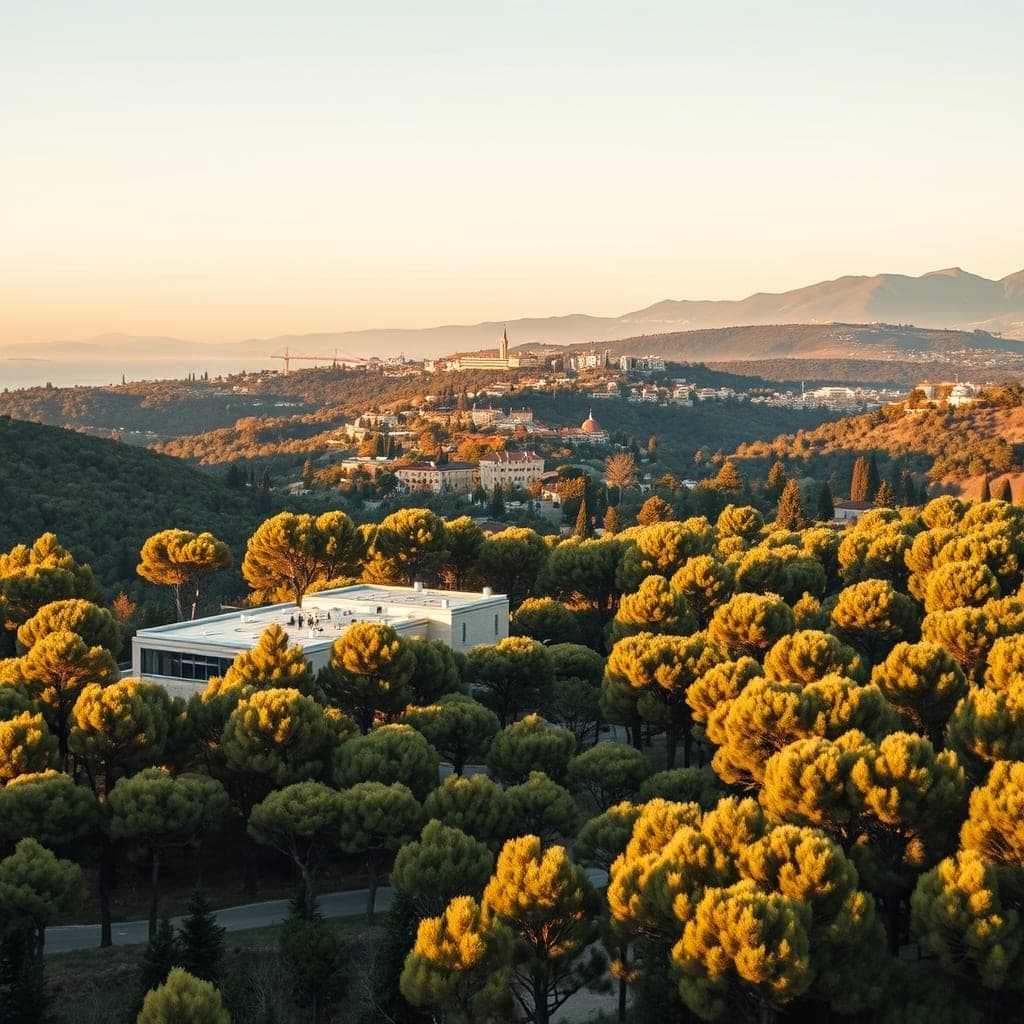
Sophia Antipolis was an improbable idea when Senator Pierre Laffitte sketched it in 1969: a city of science planted in 2,400 hectares of pine forest between Antibes and Valbonne, far from any railway line and, at the time, far from anything at all. Fifty-seven years later it is Europe's largest technology park by surface area, home to roughly 2,500 companies and more than 40,000 jobs spread across the communes of Valbonne, Biot, Mougins, Vallauris and Antibes.
The names on the buildings explain why engineers keep arriving. Amadeus, the travel-technology group, is the park's largest private employer with several thousand staff on its Sophia campus. Thales, ARM, NXP Semiconductors, SAP Labs France, Orange and Air France's IT division all run major sites here, alongside the INRIA research institute, Mines Paris, SKEMA Business School and a campus of Université Côte d'Azur. Around 80 nationalities work inside the park, and English is the working language of a good share of its labs and open-plan floors.
Here is the detail that surprises every newcomer: almost nobody lives in Sophia Antipolis. Apart from the apartment quarters of Garbejaïre and Haut-Sartoux, the park is offices, forest and roundabouts. It empties at night by design. So every relocating professional faces the same question within a week of signing a contract: which of the surrounding villages becomes home?
That single choice sets your commute, your children's schooling, your weekend habits and, eventually, the resale story of the most expensive asset you will buy in France. This guide walks through the decision the way locals would explain it over coffee on a market morning: honestly, with the numbers, and town by town.
The commute map: minutes that matter more than kilometres
Distances around the park are small; traffic decides everything. Measured to the central roundabouts near Place Sophie Laffitte and Les Bouillides, here is what the school-run rush actually looks like on a Tuesday in term time.
- Valbonne village — 6 km. Ten minutes off-peak, fifteen to eighteen at 08:30.
- Biot village — 7 km. Twelve minutes; the Saint-Philippe quarter of the park is technically on Biot's commune.
- Roquefort-les-Pins — 10 km via the D204. Fourteen to eighteen minutes, mostly against the flow.
- Mougins (Tournamy) — 10 km. Fifteen to twenty minutes.
- Le Rouret — 11 km via the D2085. Fifteen to eighteen minutes.
- Opio — 12 km. Around eighteen minutes on the D3.
- Châteauneuf-de-Grasse — 14 km. Twenty minutes on a good morning.
- Grasse — 18 km. Twenty-five to thirty-five minutes; this is the trade you make for the lowest prices in the area.
- Antibes coast — 10 km, but the D35 dual carriageway queues hard toward the park; budget twenty-five to thirty-five minutes at peak.
Two pinch points dominate: the D103 approach from the Valbonne side between 08:10 and 08:50, and the D35 climb from Antibes. The practical rule locals quote is simple — live north or west of the park and you drive against the traffic; live on the coast and you sit in it.
Car-free options have improved. The bus-tram line between Antibes and Sophia now runs on dedicated lanes, the express 230 links Nice to the park, and the Envibus network covers Valbonne and Biot. E-bike commuting has grown fast on the greenway segments, though the climb out of Biot earns its reputation. For the hinterland villages, honestly, the car remains the default.
Valbonne: the default choice, for good reasons
Ask ten Sophia engineers where they live and four will say Valbonne. The village earns its position. It sits ten minutes from the park, it hosts the region's most sought-after public school in the CIV, and it is one of the rare villages in France laid out on a grid — planned by the monks of Lérins in 1519 — which gives it straight, walkable lanes that funnel into the arcaded Place des Arcades.
Friday morning is the village at its best: the weekly market fills the square and the rue Alexis Julien, the Café des Arcades does a brisk trade in espresso and gossip in three languages, and you will hear English, Dutch and German at the next table. Roughly a quarter of Valbonne's residents are non-French, an unusual figure for a hinterland commune, and the practical consequence is real: anglophone doctors, international playgroups, and estate agents who answer email the same day. For dinner, La Table by Richard Mekni holds a Michelin star a few streets from the square.
The property maths: count on roughly 6,500 to 7,000 euros per square metre for houses, the highest average of the eight towns we cover. Village houses with character and no parking trade between 700,000 and 1.2 million euros. The family heartlands of Peyniblou and Val de Cuberte deliver four-bedroom villas on 1,500 to 2,500 square metre plots from about 1.2 to 2.5 million euros, and the gated estate of Castellaras sits above that band.
The trade-off is the premium itself — typically 15 to 25 percent over equivalent houses in Le Rouret or Roquefort-les-Pins — plus summer crowds and competitive bidding on anything well priced near the village. You are paying for liquidity as much as lifestyle: Valbonne resells faster than any neighbour.
One more option deserves a mention because it suits single relocators and couples arriving without children: the apartment quarters of Garbejaïre and Haut-Sartoux, inside the park on Valbonne's commune. Prices around 4,000 to 4,500 euros per square metre, walking distance to several employers, and a short drive to the village for the Friday market. Most residents treat it as a two-year base while they learn the area, and the resale market stays liquid for exactly that reason — there is always another newcomer arriving behind you.
Biot and Mougins: the two strong alternatives
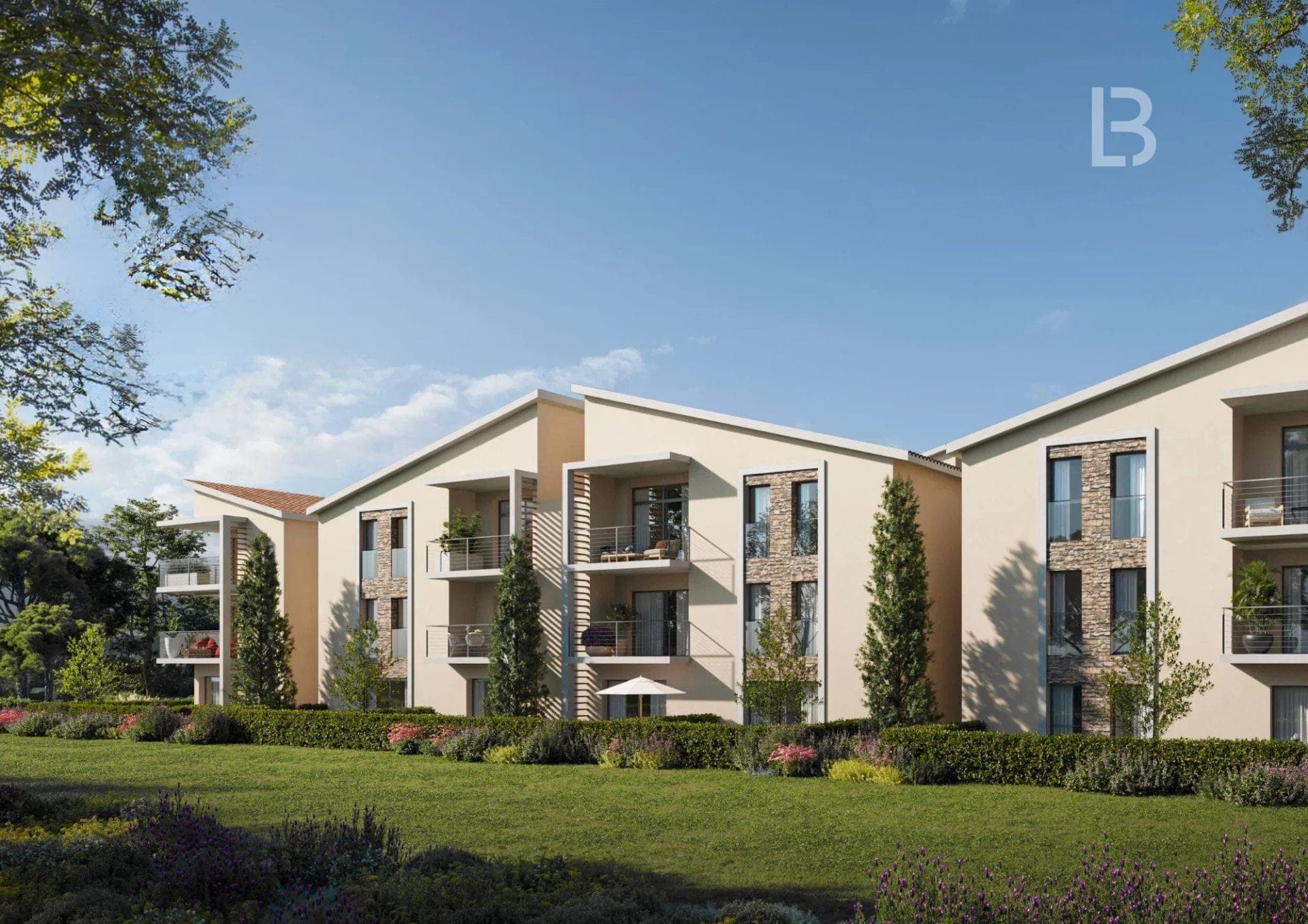
Biot is the value play that borders the park itself. The Saint-Philippe quarter of Sophia sits on Biot's commune, so parts of Biot are not near the park — they are in it. The hilltop village, famous since 1956 for its bubble-flecked glassware, keeps a working identity: the Verrerie de Biot still blows glass daily, and Les Terraillers, in a 16th-century mill at the foot of the village, holds a Michelin star. Houses average roughly 5,500 to 6,000 euros per square metre, a clear step below Valbonne, and newer apartment programmes near the Sophia border trade around 4,000 to 4,500 euros per square metre — popular with younger engineers buying a first property. Two cautions: the lanes of the old village mean parking compromises, and parts of the lower valley carry flood-risk zoning along the Brague river — your notaire will flag the PPRI status of any plot, and you should read it.
Mougins answers a different brief: more budget, more seniority, and a pull toward Cannes, ten minutes south. The old village is a ring of galleries and restaurants where Picasso spent his final years, and the commune's reputation as a gastronomic capital is earned — from L'Amandier's cookery school heritage to a dense cluster of starred and bistro tables. For relocators the decisive asset is Mougins School, the British-curriculum international school on the park's southern flank, teaching GCSEs and A-levels to around 500 students. Gated domains such as Les Bréguières offer the security and tennis-court acreage that senior executives ask for, between roughly 2 and 6 million euros, while the Tournamy and Val de Mougins sectors hold practical family villas from about 1 million. Commute: fifteen to twenty minutes.
The value arc: Le Rouret, Roquefort-les-Pins, Opio, Châteauneuf and Grasse
Drive fifteen minutes north-west of the park along the D2085 and the same money buys noticeably more house. This arc is where families land on their second look.
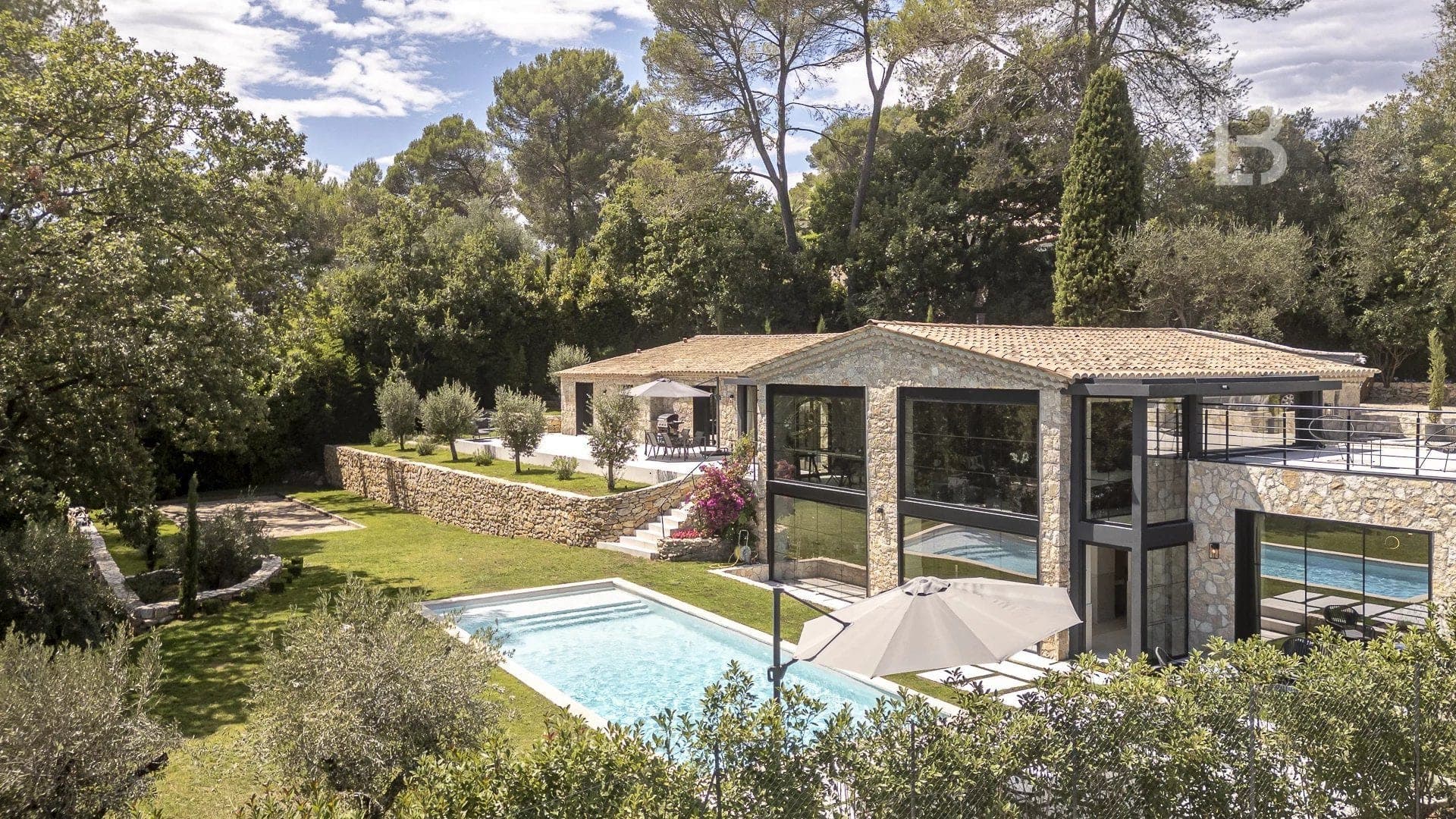
Le Rouret, at roughly 5,200 euros per square metre, delivers four-bedroom villas with pools between about 850,000 and 1.3 million euros, a genuine market square and a strong village school. Roquefort-les-Pins, its neighbour, trades a touch higher and adds something no other commune offers: equestrian zoning and horse-friendly plots in the Les Plans sector, with the local Collège César anchoring family life. The Sophia commute from both is fourteen to eighteen minutes, against the traffic.
Opio is the quiet-luxury option: olive groves, the Château de la Bégude course and the Club Med golf domain, and villas behind hedges rather than gates, averaging around 5,500 euros per square metre. Châteauneuf-de-Grasse stacks a hilltop village above the Pré du Lac crossroads, where everyday shopping is concentrated; you buy here for panoramic views that run to the sea on clear days, at similar money to Opio.
Grasse is the outlier and the bargain. At roughly 3,500 to 4,000 euros per square metre — and entry-level family villas in Plan de Grasse from about 450,000 to 600,000 euros — it offers the most house per euro within commuting range. The cost is the commute itself: twenty-five to thirty-five minutes each way, and a town that is a real working city rather than a postcard village. For a couple with one Sophia salary and one remote job, that trade increasingly makes sense, which is exactly why Grasse keeps appearing in our market reports as the volume growth story of the eight towns.
Schools: the real reason families pick their village
Talk to relocation agents who work with Amadeus or Thales arrivals and they will tell you the same thing: families choose the school first and the house second. Around Sophia, four options shape the map.
The CIV (Centre International de Valbonne) is the prize. A public collège and lycée inside the park itself, it runs international sections — anglophone, German, Italian, Spanish and more — that let children study partly in their mother tongue within the French system, with a boarding option for lycée students. Admission is by testing, organised in spring for September entry, and competition is real. The financial difference is enormous: a near-free public education versus international-school fees.
Mougins School offers the full British curriculum from age 3 to 18, with GCSEs and A-levels, and is the default for families on shorter assignments who need continuity with the UK system. Budget in the range of 15,000 to 20,000 euros per child per year depending on age.
EBICA, the bilingual international school in Sophia, covers the younger years with a 50/50 French-English model, and is a popular bridge for families intending to switch into the French system later.
Village public schools should not be dismissed. Every commune in this guide runs its own maternelle and primaire, and young children typically reach functional French within two terms of immersion. Many long-term expatriate families do exactly this: village school to age ten, then the CIV entrance tests.
One practical warning: school admission timelines drive everything. If you sign an employment contract in March, the CIV testing window may already be closing for September. Start the school file the same week you accept the job.
What each budget actually buys in mid-2026
Asking prices on the portals flatter sellers. The bands below reflect what we see going under offer across the eight towns this spring, cross-checked against sold transactions in the DVF public records, which typically run 5 to 8 percent below asking in this market.
450,000 – 550,000 euros. A three-bedroom apartment with a terrace in Biot's newer programmes or in Garbejaïre; a townhouse in Plan de Grasse; in Valbonne, at best a small village apartment. This is the first-purchase bracket for dual-income engineering couples.
700,000 – 900,000 euros. A four-bedroom villa on a modest plot in Le Rouret or Roquefort-les-Pins; a semi-detached village house with a garden in Biot; a well-placed townhouse in Valbonne. Most relocating families with one senior salary land here first.
1.1 – 1.4 million euros. The classic brief: four bedrooms, pool, 1,500 to 2,500 square metres of garden, twenty minutes or less from the park. Achievable in Opio, Châteauneuf, Le Rouret and the outer sectors of Valbonne; in Valbonne's prime family quarters you will compete hard at the bottom of this band.
1.8 – 2.5 million euros and above. Castellaras and the Valbonne contemporary market, Mougins' gated domains, and Opio's larger olive-grove properties. At this level the variable is not the house but the land: flat, usable, south-facing plots carry the premium.
A note on negotiation: this is not a market of dramatic discounts. Well-priced family houses near the park still attract multiple offers in spring. The properties where negotiation works are the over-ambitious listings that have sat for ninety days or more — and the DVF data tells you exactly which ones those are.
Budget the running costs too: taxe foncière of roughly 1,500 to 3,500 euros a year on a family villa depending on commune and size, around 2,000 to 3,000 euros a year for pool and garden upkeep if you outsource both, and home insurance that rises with pool and outbuildings. None of it is alarming, but arrivals from countries without property-level taxation are sometimes surprised by the October bill.
Rent first: what relocators learn in year one
Almost every experienced relocation adviser around Sophia gives the same instruction: rent for the first year. The buyers who regret their purchase are overwhelmingly the ones who bought in their first ninety days, off a summer viewing, before they understood the micro-geography.
What the rental year teaches you cannot be googled. Which side of the park your particular commute favours. That a north-facing slope in Châteauneuf loses the sun by 3pm in January. That the village you loved in July feels different in November — quieter in the good sense, or simply quiet. Which school gate you actually stand at, and which supermarket run you actually do.
The market itself: unfurnished three-bedroom apartments run roughly 1,600 to 2,200 euros per month around Valbonne and Biot; four-bedroom family villas with pools fetch 2,800 to 4,500 euros per month depending on commune and condition. Stock is tightest from June to September, when the school-year cycle concentrates demand, so start searching in spring for a summer move. Furnished apartments in Garbejaïre and Haut-Sartoux make practical landing pads at 1,200 to 1,600 euros per month while you search.
Expect French rental bureaucracy: a dossier with payslips, a work contract, and often a request for a French guarantor that a newcomer cannot produce. Employers' relocation services and specialist agencies bridge this gap routinely — ask for the help before you arrive, not after. Twelve months of rent at, say, 3,000 euros per month is a real cost; against it, weigh the cost of buying the wrong 1.2-million-euro house with 90,000 euros of purchase taxes you cannot recover. The rental year is cheap insurance.
Daily life: markets, the airport, and where the weekends go
The logistics that make this corner of the Riviera work for international professionals are easy to underestimate until you live them.
The airport. Nice Côte d'Azur is 27 kilometres from the park, around thirty minutes via the A8, with direct flights to well over a hundred destinations including multiple daily rotations to London, Paris, Amsterdam and Frankfurt. For a workforce that travels, this is the single biggest quality-of-life asset the region holds; many Sophia commuters fly Monday morning and return Thursday night without losing a weekend.
Markets and food. Valbonne's Friday market is the anchor of the week. Antibes' Marché Provençal runs every morning in season under its 19th-century iron roof, twenty minutes away. Grasse fills the Place aux Aires on market mornings, and every village in between has its baker worth defending in argument. Restaurant depth is unusual for countryside: two Michelin stars within fifteen minutes of the park (La Table by Richard Mekni in Valbonne, Les Terraillers in Biot), and honest bistros in every square.
The weekends. Beaches at Antibes' Plage de la Salis are twenty minutes away; the Cap d'Antibes coastal path makes a two-hour walk that feels like a holiday. In the other direction, the pre-Alps start immediately: the Gorges du Loup for canyoning and Sunday drives, Gréolières-les-Neiges for ski days fifty minutes from your door, and the GR51 trail stitching together the villages of this guide. Fibre internet is standard across all eight communes, which is why so many Sophia households now pair one office job with one remote one.
Healthcare and admin. The hospital in Antibes is twenty minutes from the park, with the university hospital network in Nice forty minutes away for anything specialised; private clinics around Cannes and Mougins cover the rest, and Valbonne's medical houses include English-speaking general practitioners used to onboarding new arrivals. Once your French social security number exists — allow two to four months and lean on your employer's HR — the carte vitale makes the system inexpensive and impressively quick. Pharmacies in every village handle far more than they would in most countries, which newcomers learn to appreciate the first time a child runs a fever on a Sunday.
Buying as an international relocator: process, fees, mortgages
France imposes no restrictions on foreign buyers, and the process is more protective of purchasers than most arrivals expect. The sequence: a written offer, then the compromis de vente (preliminary contract) signed with a deposit of around 10 percent, a statutory ten-day cooling-off period in which you may withdraw without penalty, and roughly three months of notarial searches before the final acte authentique. The notaire is a neutral public officer, not the seller's representative; you may appoint your own at no extra cost, since the fee is shared.
Costs. Budget around 7.5 percent of the purchase price in taxes and notarial fees on a resale property, and 2 to 3 percent on a new build (which instead carries VAT in its price). Agency fees are typically included in the advertised price — check the listing's mention of honoraires.
Mortgages. A French permanent contract (CDI) past its trial period, even a recent one with a Sophia employer, opens the door to resident lending terms: typically up to 80 percent loan-to-value, with rates that have settled between roughly 3 and 4 percent over recent quarters. Non-residents and those still in their trial period face lower loan-to-value ceilings, usually 60 to 70 percent, and a slower file. French banks underwrite on the rule that total debt service must stay under about 35 percent of net income, with little flexibility. A mortgage broker who works with international files — there are several established ones serving the Sophia population — typically saves more than their fee.
Currency. If part of your wealth or income sits outside the euro, plan the transfer professionally. On an 800,000-euro purchase, the spread between a bank's tourist rate and a specialist forward contract routinely covers a year of property tax.
Six mistakes relocating buyers keep making
We see the same errors often enough to list them plainly.
1. Buying on the wrong side of the park. A house in Antibes looks close on the map; the D35 at 08:20 teaches otherwise. Test-drive your exact commute at the exact hour before you offer.
2. Missing the school calendar. CIV entrance tests happen in spring. Mougins School waiting lists move year-round but tighten in summer. If schooling drives your move, the school file opens before the property search does.
3. Trusting asking prices. The DVF public record of sold transactions is free and authoritative. Five minutes of checking what neighbouring houses actually sold for repositions any negotiation.
4. Viewing only in summer. July hides everything: rush-hour traffic, school-run congestion, and the winter sun line. A north-facing plot under a hill can lose direct light for two months. Visit twice, once on a working weekday morning.
5. Skipping diagnostics on older villas. Much of the housing stock dates from the 1970s and 1980s. Septic systems that pre-date current norms, pools without compliant safety equipment, and undeclared extensions are common and all negotiable — if you find them before signing rather than after.
6. Stretching for the postcard. The village premium is real and durable, but ten minutes further out buys the garden, the pool and the guest room. Plenty of families discover that what they wanted was not Valbonne's square every evening, but Valbonne's square on Friday mornings — and a bigger house in Le Rouret the rest of the week.
How to choose: a ninety-second framework
Strip the decision to its essentials and the map sorts itself.
If you want walkable village life, the strongest international community and the CIV on your doorstep — and you will pay the premium — choose Valbonne. If you want the shortest possible distance to the park with a village identity and a gentler entry price, choose Biot, flood zoning duly checked. If your life tilts toward Cannes, the British curriculum and gated-domain privacy, choose Mougins.
If the brief is maximum family house for the money within twenty minutes — choose Le Rouret or Roquefort-les-Pins, and add horses if you wish. If it is privacy among olive trees with golf at the end of the lane, Opio or Châteauneuf-de-Grasse. If it is the most square metres per euro and a real town's services, accept the longer drive and look hard at Grasse.
Then do the three things this guide keeps repeating: drive the commute at 08:20, open the school file the week you accept the offer, and check the DVF sold prices before you negotiate. Those three habits separate the relocations that settle happily from the ones that restart eighteen months later.
La Reserve covers all eight communes with sector-level guides, sold-transaction analysis and a curated selection of properties. If you are planning a move to Sophia Antipolis this year or next, our town guides for Valbonne, Biot and Mougins are the natural next read — and when you are ready to walk streets rather than read about them, we are easy to find.
Frequently Asked Questions
Frequently Asked Questions
Valbonne village sits about 6 kilometres from the centre of the park. Off-peak the drive takes ten minutes; during the school-run window of 08:10 to 08:50 it stretches to fifteen or eighteen, mainly at the D103 approach. Many residents cycle it on e-bikes in around twenty minutes using the greenway segments.
For the first year, comfortably — especially in Valbonne, where roughly a quarter of residents are non-French and doctors, dentists, agents and clubs operate in English. The park itself works largely in English. French becomes necessary for administration (prefecture, taxes, healthcare reimbursements) and makes village life much richer; most settled expatriates reach functional French within two or three years, and their children far faster.
The classic brief — four bedrooms, pool, 1,500 square metres or more of garden, within twenty minutes of the park — runs roughly 1.1 to 1.4 million euros in Opio, Châteauneuf-de-Grasse, Le Rouret or outer Valbonne. The same house costs 15 to 25 percent more in Valbonne's prime sectors and noticeably less in Grasse, where entry-level family villas start around 450,000 to 600,000 euros in Plan de Grasse.
Four routes dominate. The CIV (Centre International de Valbonne), a public collège-lycée inside the park with international sections and spring entrance tests; Mougins School, the British-curriculum school teaching GCSEs and A-levels from age 3 to 18 at roughly 15,000 to 20,000 euros per year; EBICA, the bilingual school in Sophia for younger children; and the village maternelles and primaires, where young children typically become functional in French within two terms.
In most cases, yes — twelve months is the standard advice. The rental year teaches you your real commute, the winter sun lines, the school runs and which village actually fits your week. Family villas rent for 2,800 to 4,500 euros per month and three-bedroom apartments for 1,600 to 2,200. Set that cost against the roughly 7.5 percent purchase taxes you cannot recover if you buy the wrong house, and the rental year is inexpensive insurance.
Yes. A French permanent contract (CDI) past its trial period — even a recent one with a Sophia employer — typically unlocks up to 80 percent loan-to-value at rates that have run between roughly 3 and 4 percent in recent quarters. Non-residents and employees still in their trial period usually face 60 to 70 percent ceilings and slower files. French banks cap total debt service at about 35 percent of net income. A broker experienced with international files is usually worth the fee.
Yes, and it has improved: a bus-tram line links Antibes to the park on dedicated lanes, the express 230 connects Nice, and the Envibus network serves Valbonne, Biot and the surrounding communes. E-bike commuting is growing on the greenway segments. That said, from the hinterland villages — Le Rouret, Opio, Châteauneuf, Roquefort-les-Pins — the car remains the practical default, which is why commute direction matters so much when you choose where to live.
Need personalised guidance?
Our team knows every street and every sector across the hinterland.
Explore