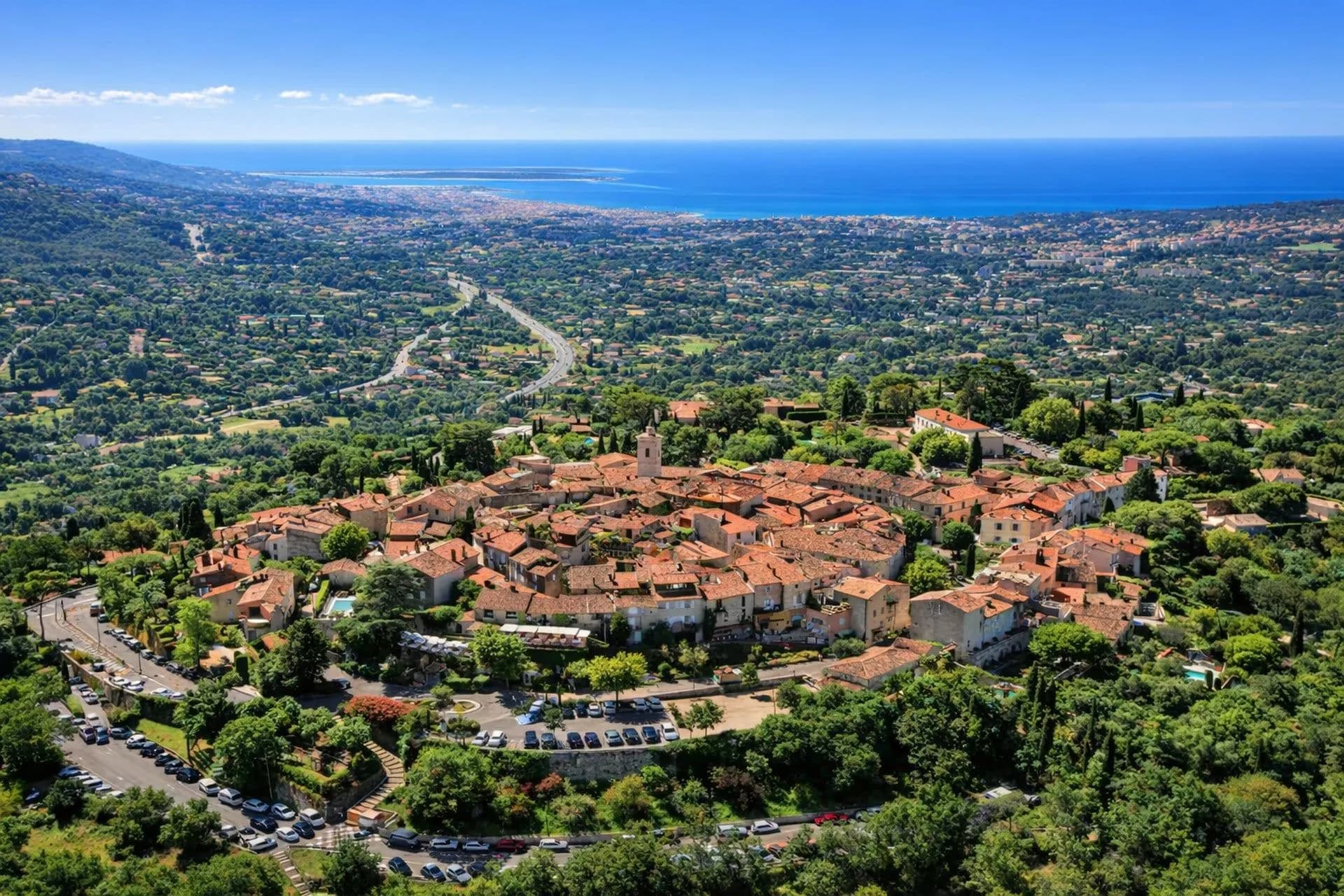
Are you allowed to let a hinterland home, and what does it earn?
Quick answer: Yes. Most owners let furnished under the LMNP regime (loueur meublé non professionnel). The rent is taxed either under micro-BIC (a flat 50% allowance for long-term or classified-tourism lets, 30% for unclassified tourism lets) or under the régime réel (you deduct actual costs and depreciation). Gross yields in the best hinterland villages are modest, usually 2–3.5% on long-term lets. People buy these second homes for the way of life and for capital growth, and the income comes second.
Plenty of owners let here, but the market runs on lifestyle and capital first. The scarcity behind price changes of +13% to +59% since 2021 across the eight villages (DVF medians for houses sold for €1M or more, or €700,000 or more in Le Rouret, 2021–2025) also keeps rental yields below those of cheaper regions. Seasonal letting lifts the gross figure, but it brings management, empty weeks and, since the 2024 tourism-letting reforms, more rules. This guide is current as of June 2026. Tax treatment depends on your own situation, so confirm everything with a French accountant (expert-comptable) and your notaire.
General information, not tax advice
How furnished letting is taxed depends on where you live, your other income and how you hold the property. The figures below are dated and taken from official sources, but thresholds and rates change with each loi de finances. Take advice from an expert-comptable before you rely on any number, above all as a non-resident, where French tax and the tax of your home country interact.
LMNP: micro-BIC vs régime réel
Micro-BIC is the simpler option. You take a flat allowance (50% long-term/classified, 30% unclassified tourism) and pay tax on the rest. Under the régime réel you deduct actual costs plus depreciation, which on a larger property often brings taxable income down to nothing. The price is proper accounts. Your costs and your borrowing decide which suits you.
| Micro-BIC | Régime réel | |
|---|---|---|
| How taxed | Flat allowance, then taxed | Actual costs + depreciation deducted |
| Allowance / deductions | 50% (long-term & classified tourism), 30% (unclassified tourism) | Real expenses, interest, depreciation |
| Turnover ceiling (2025 income) | €77,700 (long-term & classified tourism), €15,000 (unclassified tourism) | No ceiling, available by election |
| Admin | Light | Accountant usually needed |
| Best when | Low costs, low or no mortgage | High costs, mortgage, or recent purchase |
Source: impots.gouv.fr: location meublée and the furnished-tourism regime page, as of June 2026. The thresholds are €77,700 (long-term & classified tourism) and €15,000 (unclassified tourism). The annual loi de finances sets them, and the 2025 reform tightened them for tourism lets. Confirm the figure for your type of letting and tax year with an expert-comptable.
The 2025 change: depreciation now bites on sale
Since the Loi de finances 2025 (n° 2025-127, art. 84, amending CGI art. 150 VB), for disposals on or after 15 February 2025, the depreciation an LMNP owner deducted under the régime réel is added back when calculating the capital gain on sale (the acquisition price is reduced by the depreciation taken). The taxable gain goes up accordingly. The long-standing exemptions still apply: income-tax CGT after 22 years of ownership, social levies after 30 years.
The change hits hardest if you let under the régime réel and plan to sell before the taper runs out. Before, depreciation cut your annual tax on rent without increasing the gain on sale. Now it does both. The headline plus-value rates and the 22-year / 30-year exemption timeline stay the same. Only depreciation that was deducted under the réel regime is concerned, so micro-BIC owners are not affected on this point.
How it interacts with non-resident CGT
French capital-gains tax on property applies wherever you live, because the gain arises in France. Read this section with our plus-value / capital gains guide, which covers the rates, the taper to zero and the fiscal representative rule for non-residents. Ask an expert-comptable to model réel against micro over both your letting years and the sale you expect.
Seasonal vs long-term, registration and taxe de séjour
Long-term furnished lets are simpler and steadier. Short-term tourism lets earn more gross but carry tighter rules. Since 20 May 2026 every tourism let needs a declared registration number, the 2024 reform cut the unclassified-tourism allowance to 30%, and you must collect taxe de séjour from guests.
- Long-term furnished (bail meublé). A one-year lease (nine months for a student), steadier income and less management. Taxed under LMNP micro-BIC at the 50% allowance or under the réel. Most owners who want income without involvement choose this.
- Short-term / seasonal tourism. More gross income on offer, with more work and more regulation. Since the November 2024 furnished-tourism reform, the micro-BIC allowance for unclassified tourism lets is 30% (classified stays at 50%). Since 20 May 2026 every furnished tourism let in France needs a registration number, and communes have the power to cap nights or restrict change of use. Check the mairie’s rules before you count on Airbnb-style income.
- Taxe de séjour. A tourist tax per guest and per night that you collect and pay over. Each commune sets its own rate, which also depends on the rating. The guest pays it, not you, but you have to handle it.
- Furniture standard. To count as meublé, a let must meet the statutory list of minimum equipment. If it falls short, it is treated as unfurnished, with different and usually less favourable tax.
Realistic yields, and the wider picture
Think of the hinterland as a capital-growth market with modest income. It is not a high-yield market. Long-term gross yields here usually run at 2–3.5%, and net is lower after taxe foncière, management, insurance and empty periods. Your return depends more on the price change since 2021 (+13% to +59%) than on rent.
Indicative gross yields (annual rent ÷ price) in the best villages sit in the low single digits, because the houses are expensive compared with local rents. Seasonal letting pushes the headline figure up. Empty weeks, management at 20–30% of revenue, wear and the tighter tourism rules then pull it back down. Work from a net figure, not a gross one, and set it against the capital side:
- Budget the carrying costs first: taxe foncière and taxe d’habitation on second homes, insurance, management and maintenance.
- Model the exit: the 2025 depreciation change and the non-resident capital-gains rules decide what you keep when you sell.
- Choose the ownership structure with care: an SCI changes how letting income and succession work. Take advice before you buy to let.
- Start from the basics: the complete guide to buying in France as a foreigner and the full cost of buying.
For our view of a specific property’s value and letting potential, use the online estimate tool or talk to our team.
← Part of our guide: Buying property in France as a foreigner