Lifestyle
The Market Circuit: A Week of Provençal Mornings
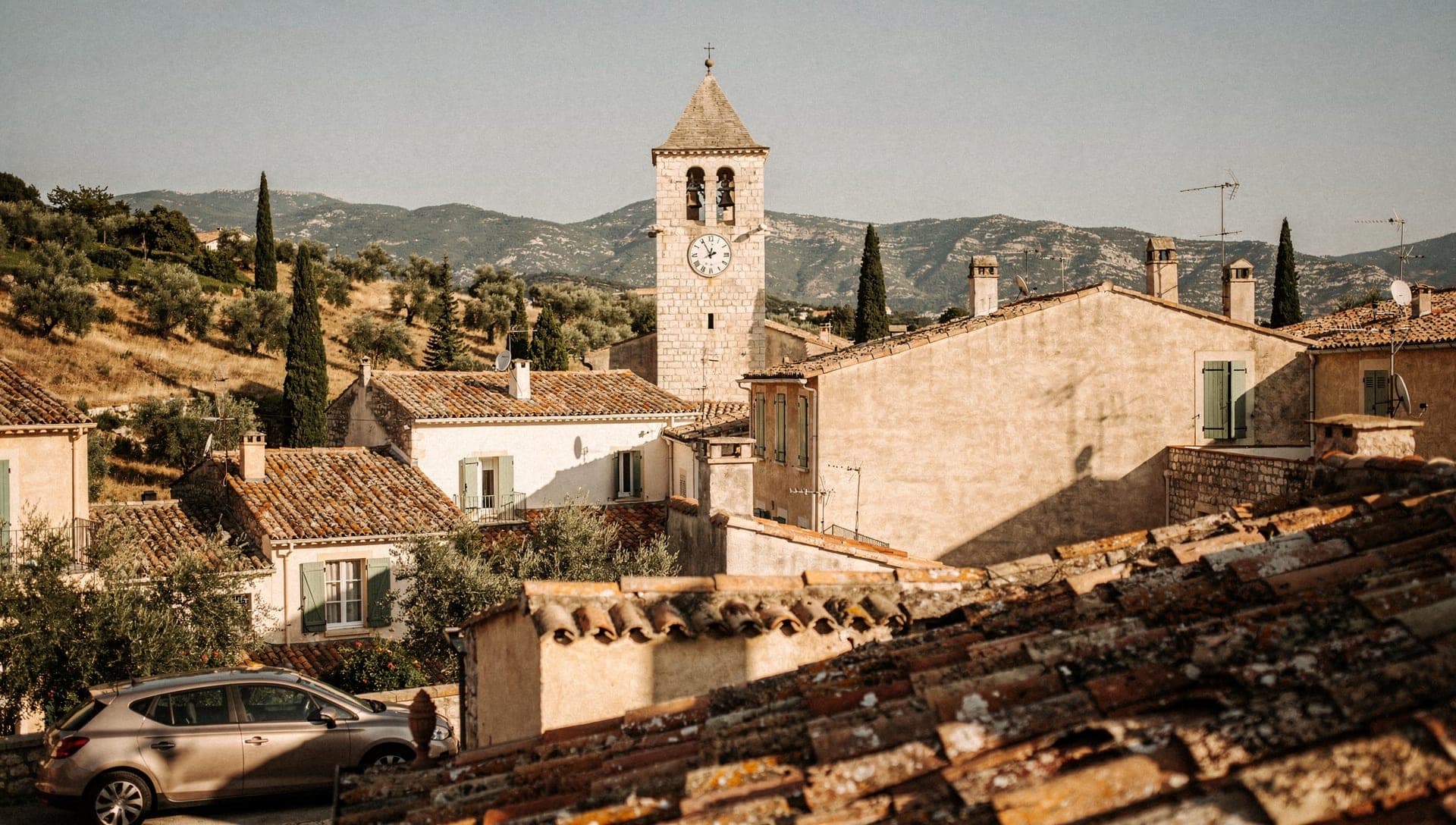
Seven days, eight villages, one rhythm. From Biot's Tuesday stalls to Valbonne's Friday arcades and Mougins on Sunday — the market week that organises life in the hinterland.
In This Guide
The Market Circuit: A Week of Provençal Mornings
A Week Measured in Markets
In the villages between the Loup and the Siagne, the week does not really begin on Monday. It begins on market day. Ask a Valbonnais what day it is and the answer often arrives as a position relative to Friday: two days before the market, the morning after it. The stalls give the week its shape in a way that no office calendar quite manages.
This is not nostalgia. The weekly markets of the Riviera hinterland are working institutions, regulated by each mairie, with allocation rules that favour local producers and waiting lists for the best pitches. They are where retired couples from Châteauneuf meet engineers from Sophia Antipolis over the same crate of June strawberries, where second-home owners learn their first French, and where new arrivals discover — usually within a fortnight — which cheese stall is worth queuing for.
For anyone considering a home in Valbonne, Mougins, Biot, Grasse, Opio, Roquefort-les-Pins, Châteauneuf-de-Grasse or Le Rouret, the market schedule is more useful than it first appears. It tells you when each village is at its fullest and most social, when parking becomes an art form, and which squares fall quiet for the rest of the week. It is also, as we explore later in this guide, a measurable factor in property values: homes within a short walk of a good weekly market carry a clear premium across the hinterland.
So here is the week as the locals actually live it: a market circuit that starts quietly on Monday, builds through Biot on Tuesday and Roquefort-les-Pins on Wednesday, drops to the coast on Thursday, peaks under Valbonne's arcades on Friday, fills the old tanners' square in Grasse on Saturday, and ends with Sunday morning in Mougins, basket in one hand, coffee in the other.
A practical note before we set off: every market in this guide is a morning affair, and the mornings are not interchangeable. Each village square has its own acoustics, its own regulars and its own unwritten seating plan on the café terraces. Treat the schedule below as a sampler for your first month in the area. By the second month, you will have chosen your market the way residents eventually choose their boulangerie — through a mixture of geography, loyalty and one memorable tomato — and the rest of the circuit will become what it is for everyone here: a pleasant excuse to visit the neighbours.
Monday: The Quiet Day
Monday is the hinterland's pause. None of the eight villages holds its main food market today, and there is a logic to it: many producers spend Monday in the fields or at the wholesale market in Nice, restocking after the weekend rush. Village squares that were packed on Sunday morning — Mougins above all — return to their weekday selves: a few café tables, delivery vans, the smell of bread from the boulangerie.
For residents, Monday is pantry day. The Sunday haul gets cooked: the last of the courgette flowers fried before they wilt, tomatoes turned into sauce, apricots into compote. It is also the day many village restaurants close, so plan accordingly if you are viewing properties and hoping for lunch in Valbonne or Mougins village.
If you genuinely cannot face a day without stalls, the answer lies on the coast. In Cannes, the food traders of the Marché Forville rest on Mondays and the covered hall fills instead with brocante — furniture, linens, glassware and the occasional genuine find, twenty minutes from Mougins by the Pénétrante. It is a fitting Monday outing for new homeowners: more than one Valbonne kitchen has been furnished, copper pan by copper pan, from the Forville Monday stands.
Monday also rewards a different kind of shopping: the permanent commerce that markets tend to overshadow. Valbonne's village centre keeps two butchers, a fishmonger and several greengrocers trading all week; Grasse's pedestrian rue Jean Ossola does the same. One of the under-appreciated facts of hinterland life is that the markets sit on top of a complete everyday infrastructure, not in place of one. A week of eating well here never actually depends on a single market day — it is simply better organised around them.
Tuesday: Biot, Glass and Greengrocers
The circuit proper opens on Tuesday morning in Biot, where stalls run from the rue Saint-Sébastien up towards the Place des Arcades from 8.30am to 1pm. This is a food-first market by design: the commune's market regulations give priority to local producers and organic growers, which keeps the emphasis on what was picked the previous evening rather than on printed tablecloths and soap.
Biot wears its working history lightly. The village built its name twice over — first on pottery and jarres, the great earthenware storage jars exported across the Mediterranean, then from 1956 on bubble-flecked glass, when the Verrerie de Biot turned a flaw into a signature. Shopping here on a Tuesday puts you in the middle of that continuity: artisan workshops behind the stalls, the galleries of the rue Saint-Sébastien opening their shutters as the fruit sellers call out prices.
Practically, Biot's market is the most useful in the eastern hinterland for anyone working at Sophia Antipolis. The technology park is barely ten minutes up the D4, which is why you will see badge lanyards among the baskets — researchers doing the week's fruit shop before a 9.30 meeting. Buyers weighing up Biot village against Valbonne village often discover the deciding factor is exactly this kind of texture: Biot is smaller, steeper and quieter, with apartments in the old village typically trading between €4,500 and €5,500 per square metre, noticeably below Valbonne's equivalent.
Stay for coffee at the top of the village once your basket is full. The arcaded Place des Arcades, with its sloping cobbles and 15th-century irregularity, is one of the prettiest small squares on the entire circuit, and on a Tuesday morning in June you may have it nearly to yourself.
Wednesday: Roquefort-les-Pins and the Pré du Lac
Wednesday belongs to the plateau. In Roquefort-les-Pins, the Provençal market sets up in the morning along the D2085 — the route de Grasse — beside the town hall car park, in the district locals call Le Plan. It is a modest, sociable affair: a rotisserie van, two or three producers down from the hills, a cheesemonger, a fish stall. Roquefort has no medieval centre to stage a grand market in; what it has instead is space, pine forest and the largest horse paddocks in the area, and its market matches the town — practical, friendly, unhurried.
Eight minutes west along the same road, the Pré du Lac crossroads serves as the shared commercial heart of three communes: Châteauneuf-de-Grasse, whose hilltop old village sits just above it, Opio and Le Rouret. Châteauneuf holds its market here on Wednesday and Friday mornings from 9am to 2pm, a compact food market that residents of all three villages treat as their own. For families weighing up these communes — often drawn by the Collège César in Roquefort or the gentler property prices, with family villas typically €1.1m to €1.8m against €1.5m-plus for equivalents in Valbonne — Wednesday morning at Pré du Lac is the single best hour of fieldwork you can do.
Once a month, Wednesday gains an accent. On the first Wednesday, Le Rouret's Place de la Libération hosts an Italian market from 9am to 4pm: porchetta, fresh pasta, Ligurian olives and parmesan wheels sold by traders who cross the border that morning. It is a reminder of how close Italy sits — Ventimiglia is under an hour from Le Rouret — and a fixture worth marking in the diary, because the porchetta sells out by noon.
Thursday: The Coast Run to Antibes
Thursday is the day the hinterland borrows the coast. None of the eight villages stages its headline market today, so locals do what locals have always done: they drop down to Antibes. The Marché Provençal on the cours Masséna, under its 19th-century iron canopy a street back from the ramparts, runs every morning in summer — and from Valbonne or Biot the old town is a 20 to 25 minute drive, less if you beat the school traffic on the D35.
The cours Masséna is a different register from the village markets: bigger, louder, more theatrical. This is where you find the full Mediterranean repertoire — sea bream and rougets straight off the Antibes boats, six varieties of olive from the hills behind Nice, candied fruit from Apt, and flower stalls that supply half the dinner parties in Cap d'Antibes. Prices are a notch higher than in Roquefort or Châteauneuf, and the accents around you shift from Provençal to international, but the quality at the producer stalls is exceptional.
Make the morning of it. A socca from one of the stands near the absinthe bar, eaten warm from the paper, is the canonical mid-shop snack; the Picasso museum in the Château Grimaldi is two minutes away and quiet at opening time on Thursdays. For hinterland residents this rhythm — village markets most days, the coast once a week — captures something essential about why people choose Valbonne or Biot over Antibes itself: you keep the sea as an option rather than an obligation, along with quieter streets, better parking and considerably more garden for the money. A four-bedroom villa budget that buys a small apartment in Cap d'Antibes still buys 1,500 square metres of olive terraces in Opio.
Friday: Valbonne, the Week's Centrepiece
Friday morning in Valbonne is the high point of the hinterland market week, and everyone within fifteen kilometres knows it. From 8am to around 2pm, roughly 105 stalls fill the Place des Arcades and spill along the rue Grande and the boulevard Carnot, threading through a grid of streets laid out by monks in 1519 — Valbonne is that rarity in Provence, a planned village, which is precisely why a market fits it so well.
The range is the widest on the circuit. At the food end: goat's cheeses from the Préalpes, olives and tapenades, a celebrated rotisserie whose chickens perfume the entire boulevard, spice merchants, Italian cheeses, fish from Cros-de-Cagnes. Beyond food, the market stretches into linens, baskets, pottery, clothing and jewellery — the full Provençal market experience rather than a pure producers' affair. Serious shoppers arrive before 9am; by 10.30 in June the rue Grande moves at a shuffle, and the vendors begin packing around 12.30pm.
The social geography is worth reading closely if you are house-hunting. Friday is when Valbonne's international community is most visible — the village is home turf for families at the Centre International de Valbonne (CIV), the school whose international sections anchor much of the area's expatriate demand — and the café terraces around the arcades, the Café des Arcades first among them, operate as an informal village forum from 10am. Property within walking distance of the square commands the strongest premium in the village: expect €6,000 to €7,500 per square metre for renovated village houses and apartments, against €5,000 to €5,500 in the residential quarters a ten-minute drive out. On Friday mornings, you understand exactly what that premium buys.
Saturday: Grasse, with an Italian Detour
Saturday morning belongs to Grasse. The market on the Place aux Aires runs from 7am to 1pm, and the setting alone justifies the drive up the D2085: a long, arcaded square at the top of the old town, ringed by ochre and apricot façades, that once housed the city's tanners before perfume made Grasse's fortune. Produce arrives from the hills behind the city — the Plan de Grasse and Saint-Jacques plateaux still grow market crops — and the mix of stallholders reflects old Grasse: Provençal farmers, Italian families, traders whose grandparents arrived from North Africa, all shouting cheerfully over each other by 9am.
Grasse's market matters to property buyers for a particular reason: it anchors the most affordable village-centre living on the circuit. Renovated apartments in the old town trade between €2,500 and €3,500 per square metre — half of Biot, a third of central Valbonne — and the Saturday market is one of the amenities that make old-town Grasse work as a full-time home rather than a project. A two-bedroom apartment with a balcony over a quiet traverse, five minutes' walk from the Place aux Aires, remains findable under €300,000.
Saturday offers two satellite stops. Biot repeats its market from 8.30am to 2pm for those east of the Brague. And on the second Saturday of each month, Opio's commercial centre on the route de Nice hosts its own Italian market from 9am to 5pm — smaller than Le Rouret's Wednesday edition but with the same border-crossing logic and an excellent mozzarella van. Between Grasse in the morning and Opio after lunch, the second Saturday of the month is arguably the best food-shopping day the hinterland offers.
Sunday: Mougins Before Lunch
The week closes where the hinterland's food story is richest. Mougins holds its market on Sunday mornings from 8am to 1pm, and the timing is no accident: this is a market designed to flow into lunch, in the village Roger Vergé put on the world's culinary map from his Moulin de Mougins in the 1970s, and which still stages the Étoiles de Mougins gastronomy festival each year.
The market itself is compact and quality-led — producers' vegetables, flowers, cheese, a fish stall, good bread — and it draws a knowledgeable crowd: chefs from the village restaurants shop here, and it shows in what sells first. Arrive by 9am for the best of it, then do as the Mouginois do and walk up into the old village, a snail-shell spiral of lanes around the church, where the art galleries that succeeded Picasso's residency at Notre-Dame-de-Vie now alternate with restaurant terraces.
Sunday lunch after the market is a Mougins institution in itself. Tables on the Place du Commandant Lamy fill by 12.30, from the village bistros to L'Amandier, the cookery-school landmark Vergé founded; booking ahead in June is not optional. For prospective buyers, the Sunday scene demonstrates Mougins' particular proposition: it is the most polished of the eight villages, fifteen minutes from the Croisette yet wrapped in green, with the Mougins School's British curriculum historically drawing anglophone families to the Font de l'Orme side of town. Village-house prices reflect the polish — €7,000 to €9,000 per square metre at the centre — but a Sunday morning here, market bag full, lunch booked, makes the arithmetic feel reasonable.
What Market Day Means for Property Buyers
Markets are pleasant; they are also priced in. Across the hinterland, the homes that sell fastest and resist downturns best share one trait: you can walk to the weekly market without thinking about it. Agents in Valbonne talk about the arcades premium; in Grasse, the streets within five minutes of the Place aux Aires outperform the rest of the old town. Our own review of asking prices across the eight communes suggests walk-to-market properties carry a premium of roughly 10 to 15 per cent over otherwise comparable homes a short drive away — and they let faster on the seasonal rental market, where Friday market access is a line that earns its place in any Valbonne listing.
The premium is rational. Market-walkable homes tend to sit in the historic cores, which are protected, finite and impossible to replicate; the market is simply the most visible weekly expression of that scarcity. They also suit the two groups driving hinterland demand: international families who want village life within reach of the CIV or Mougins School, and downsizing couples for whom the Friday shop on foot replaces the car-dependent routine they came here to escape.
Three practical notes for buyers. First, check what market day does to your street: Valbonne's boulevard Carnot is closed to traffic on Friday mornings, which is charming unless you needed the car at 8am. Second, ask about cellar or garage storage — village houses near squares rarely offer it, and a weekly market habit fills shelves. Third, visit your target property on market day and again on a quiet day. The gap between the two is the truest picture of the village you will get, and it costs nothing but two mornings.
Shopping Like a Local
A few habits separate residents from visitors at any hinterland market, and adopting them early speeds the transition from one to the other. Greet first, buy second: a bonjour before any transaction is not optional courtesy but the price of admission. Do not handle the produce — point, describe, and let the stallholder choose; a good vendor will ask when you plan to eat the melon and pick accordingly, which is the entire point of buying from one. Bring a basket or trolley, carry cash in small notes for the producers (most larger stalls now take cards, but the grower with three crates of figs may not), and learn the magic phrase c'est pour aujourd'hui — it tells the vendor to select fruit at its peak.
Learn the difference between producteur and revendeur. Producers sell what they grow — the sign will often say producteur or récoltant, and in Biot the market rules deliberately favour them. Resellers buy at the wholesale markets and offer wider range and steadier supply. Both have their place; knowing which you are talking to tells you what questions to ask.
June, for the record, is a glorious month to start. The first Provençal melons arrive alongside cherries from the Tanneron hills, apricots, courgette flowers for stuffing, fresh almonds and garlic plaits. By the time the figs and muscat grapes appear in late August, the stallholders will know your name — and at that moment, sometime around your tenth market, the hinterland stops being a place you bought a house and starts being where you live.
Beyond the Weekly: Fairs, Fêtes and Seasonal Markets
The weekly circuit is the skeleton of the year; the fêtes are its punctuation. Every one of the eight villages keeps at least one annual celebration that turns its market square into something larger, and these dates are worth knowing even before you own a fridge to pin them to — they are the weekends when each village shows you, in concentrated form, exactly who it is.
The year opens with Valbonne's Fête de la Saint-Blaise in late January, the village's biggest annual event and one of the oldest on the Riviera calendar. For three days the Place des Arcades and surrounding streets host an enlarged Provençal market, a carnival procession and chef demonstrations, all in honour of the servan, the local grape variety traditionally kept hanging on the vine into winter. The 2026 edition, themed around the 1980s, drew crowds that made an ordinary Friday market look deserted — and gave anyone weighing a village-centre purchase a vivid preview of what the premium weekends feel like.
Spring and summer belong to Grasse. ExpoRose in early May fills the perfume capital with garden displays, rose competitions and perfume workshops; the Fête du Jasmin — its 80th edition runs from 31 July to 2 August 2026 — closes the summer with flower-laden floats, parades and fireworks. Between them, the markets of the Place aux Aires gain flower stalls you will see at no other time of year. August adds Biot's glass festival, when the village's workshops open their doors and an artisan market joins the Tuesday and Saturday food stalls; September follows with its international glass art exhibition.
Two smaller fixtures deserve a note. On 21 June, the Fête de la Musique puts free concerts in every market square in the hinterland at once — Valbonne's arcades and Mougins' Place du Commandant Lamy are the standout stages. And in December, the Christmas markets arrive: Valbonne's, set under the arcades with the village strung in lights, is widely judged the most atmospheric in the area, with Mougins and Grasse running their own editions through the month. For owners who let their properties seasonally, these dates matter commercially as well as socially — festival weekends book out months ahead, at rates 20 to 30 per cent above an ordinary winter weekend. For everyone else, they are simply the weeks when the hinterland's market squares do what they were built four centuries ago to do: hold the whole village at once.
Planning Your Market Week
Here is the circuit at a glance, as lived from any of the eight villages:
- Monday — no village market; brocante under the Forville canopy in Cannes; permanent shops in Valbonne and Grasse cover the basics.
- Tuesday — Biot, rue Saint-Sébastien, 8.30am to 1pm. Food-led, producer-friendly, ten minutes from Sophia Antipolis.
- Wednesday — Roquefort-les-Pins at Le Plan (morning) and Châteauneuf at Pré du Lac, 9am to 2pm. Italian market at Le Rouret on the first Wednesday, 9am to 4pm.
- Thursday — the coast run: cours Masséna in Antibes, every morning in summer, 25 minutes from Valbonne.
- Friday — Valbonne, Place des Arcades and surrounding streets, 8am to 2pm, around 105 stalls. The week's main event. Châteauneuf repeats at Pré du Lac.
- Saturday — Grasse, Place aux Aires, 7am to 1pm; Biot again, 8.30am to 2pm; Italian market at Opio on the second Saturday, 9am to 5pm.
- Sunday — Mougins, 8am to 1pm, followed by the longest lunch of the week.
Three timing rules hold everywhere. Arrive before 9am in July and August, when visitor numbers double and shade disappears. Assume vendors start packing at 12.30pm regardless of official closing times. And treat the monthly Italian markets as appointments rather than options — the best of them is gone by late morning. Pin this list to the fridge for your first month; after that, you will not need it. The week will simply have taken its proper shape.
Frequently Asked Questions
Frequently Asked Questions
Need personalised guidance?
Our team knows every street and every sector across the hinterland.